Stop treating your breakfast like a chore and start treating it like a structural engineering project. We are moving beyond the realm of simple boiled grains and entering the high-stakes world of Rice Congee Kinetics. This is the art of the long-phase hydration; a process where the crystalline structure of the rice grain is systematically dismantled and reconstructed into a luxurious, cream-like suspension. When you achieve the perfect bowl, you are not just eating porridge. You are consuming a masterpiece of starch gelatinization. The aroma should be clean yet deep, while the texture must be smooth enough to coat a silver spoon without a single hint of grit. We are looking for a specific viscosity that defies the standard laws of liquid dynamics. If your current rice-to-water ratio feels like a guessing game, you are doing it wrong. We are here to audit your technique, optimize your thermal output, and ensure that every grain of jasmine rice is rendered into a silk-smooth emulsion that vibrates with culinary authority.
THE DATA MATRIX
| Metric | Specification |
|---|---|
| Prep Time | 15 Minutes |
| Execution Time | 90 Minutes |
| Yield | 4 Servings |
| Complexity (1-10) | 4 |
| Estimated Cost per Serving | $0.85 |
THE GATHERS
Ingredient Protocol:
- 200g / 1 cup Jasmine Rice (long-grain)
- 2.4L / 10 cups Filtered Water or Chicken Bone Broth
- 15g / 1 tbsp Fresh Ginger, julienned
- 5ml / 1 tsp Toasted Sesame Oil
- 3g / 0.5 tsp Fine Sea Salt
- Optional: 100g / 3.5oz Shredded Poached Chicken or Century Egg
Section A: Ingredient Quality Audit:
If your rice smells dusty or lacks that characteristic floral punch, your aromatic compounds have oxidized. Fix this by rinsing the rice in a fine-mesh sieve until the water runs crystal clear; this removes excess surface starch that causes gummy, rather than creamy, textures. If your water source is high in minerals, it can interfere with the breakdown of the rice husk. Use filtered water to ensure the Rice Congee Kinetics remain predictable. For sub-par broth that lacks body, whisk in a teaspoon of hydrolyzed collagen or a small amount of chicken fat to render a richer mouthfeel.
THE MASTERCLASS
1. The Hydration Pre-Phase
Begin by soaking your rinsed rice in a bowl for at least thirty minutes. This initiates the internal softening of the grain before it ever hits the heat. Use a digital scale to ensure your ratios are exact; precision is the enemy of mediocrity.
Pro Tip: Soaking allows the water to penetrate the center of the grain, ensuring that when the heat is applied, the starch granules swell and burst simultaneously rather than at staggered intervals.
2. The Thermal Launch
Transfer the rice and your liquid of choice into a heavy-bottomed saucier. Bring the mixture to a rolling boil over high heat, stirring constantly with a silicone spatula to prevent any grains from scorching on the floor of the vessel.
Pro Tip: A saucier is superior to a standard pot because its rounded edges prevent "dead zones" where rice can trap heat and burn, ensuring a more uniform viscous transition.
3. The Low-Impact Simmer
Once the boil is achieved, drop the heat to the lowest possible setting. Cover the pot partially, leaving a small gap for steam to escape. This prevents a pressure build-up that could lead to a messy boil-over.
Pro Tip: Constant agitation is not required during this phase. Let the convection currents of the simmering liquid do the work of breaking down the grain structure naturally.
4. The Emulsification Finish
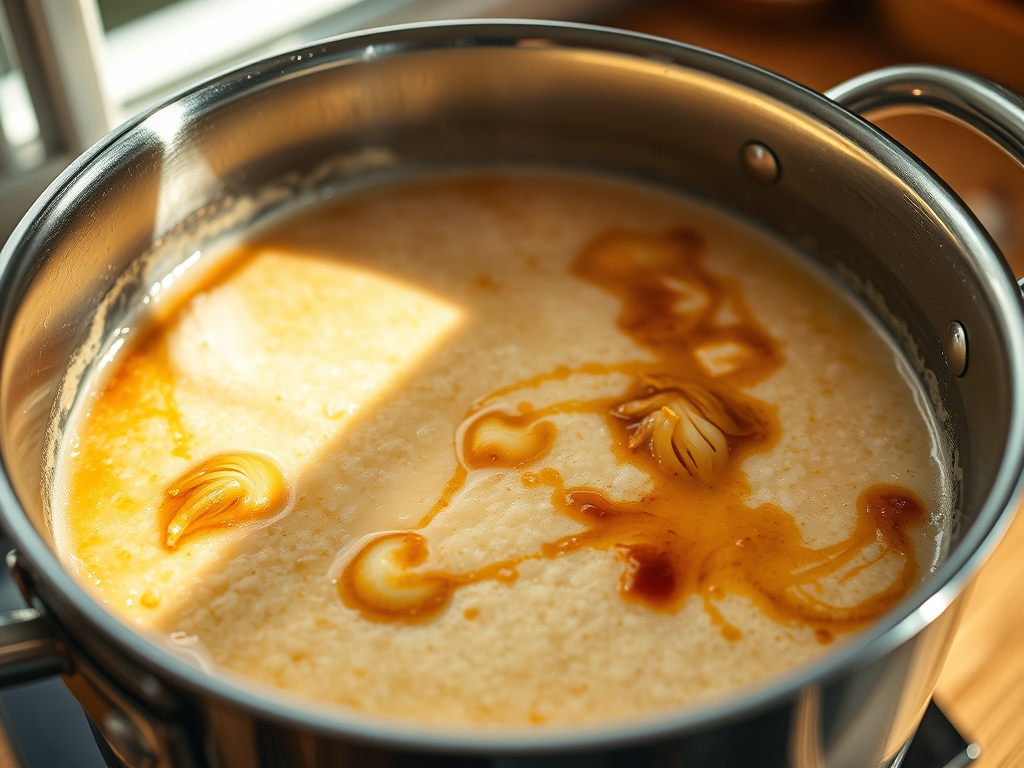
After 60 to 75 minutes, the grains should be invisible, merged into a singular white cloud. Use a whisk to vigorously aerate the mixture for two minutes. This final mechanical action releases the last of the amylopectin, creating that signature glossy finish.
Pro Tip: If the mixture looks too thick, add boiling water 50ml at a time. Never add cold water at this stage, as it will shock the starches and cause the suspension to "weep" or separate.
Section B: Prep & Timing Fault-Lines:
The most common failure in Rice Congee Kinetics is the "rush-job." If you increase the heat to finish faster, you will evaporate the liquid before the grains have fully hydrated, resulting in a gritty, uneven mess. Use a kitchen timer to enforce the 90-minute window. If your congee is sticking to the bottom, your heat is too high or your pot is too thin. Switch to a heat diffuser plate to manage the thermal transfer more delicately.
THE VISUAL SPECTRUM
Section C: Thermal & Visual Troubleshooting:
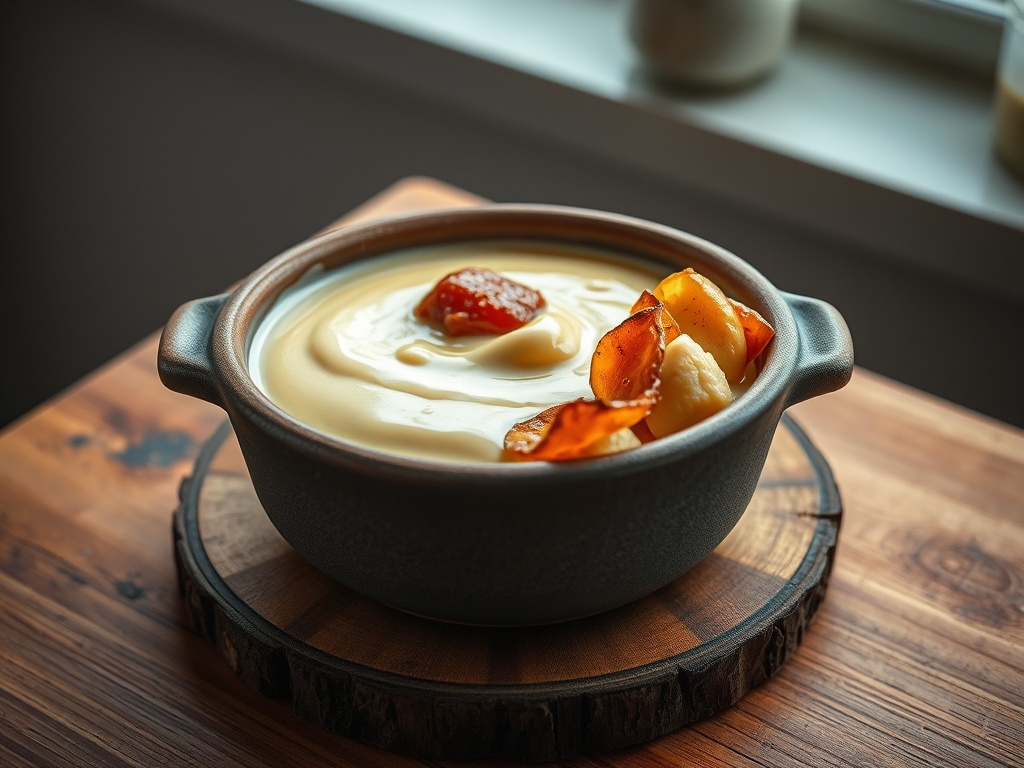
Look at the reference image above. Notice the "halo" effect around the edges of the bowl; this indicates a perfect emulsion where the fat and starch have bonded. If your congee looks dull or grey, you likely skipped the rinsing phase or used tap water with high chlorine levels. If the color is too yellow, you may have over-boiled your ginger, causing it to infuse too aggressively. The texture should appear like a heavy cream, not a stiff paste. If you see distinct grains of rice floating in a clear liquid, you have not reached the "Broken Grain" threshold. Return to the simmer for another twenty minutes and whisk vigorously to force the starch release.
THE DEEP DIVE
Macro Nutrition Profile:
A standard serving of plain congee provides approximately 150 calories, 30g of carbohydrates, 3g of protein, and less than 1g of fat. It is a high-glycemic fuel source, making it an exceptional recovery meal for athletes or those needing gentle digestion.
Dietary Swaps:
For a Vegan iteration, utilize a rich mushroom dashi instead of chicken broth to infuse the base with umami. For a Keto alternative, you must pivot entirely to "cauliflower rice" simmered with xanthan gum to mimic the viscosity, though the kinetics will differ significantly. This recipe is naturally Gluten-Free, provided your broth source is certified.
Meal Prep & Reheating Science:
Congee is a structural chameleon. As it cools, the starch molecules undergo retrogradation, turning the liquid into a solid gel. To reheat, you must break this gel by adding 60ml of liquid per serving and heating slowly while whisking. This restores the molecular structure and returns the dish to its original silky state.
THE KITCHEN TABLE
Why is my congee watery?
You likely didn't simmer it long enough to achieve full starch gelatinization. Continue cooking without a lid to evaporate excess moisture and whisk the grains to release more starch, which acts as a natural thickening agent.
Can I use brown rice?
Brown rice has an intact bran layer that resists the "broken grain" process. It requires twice the cooking time and significantly more liquid. The resulting texture will be nutty and fibrous rather than smooth and creamy.
How do I fix a burnt bottom?
Do not scrape the bottom! Immediately pour the "clean" congee into a new pot. The burnt flavor travels fast, so add a pinch of smoked salt or extra ginger to mask any lingering acrid notes.
What is the best topping strategy?
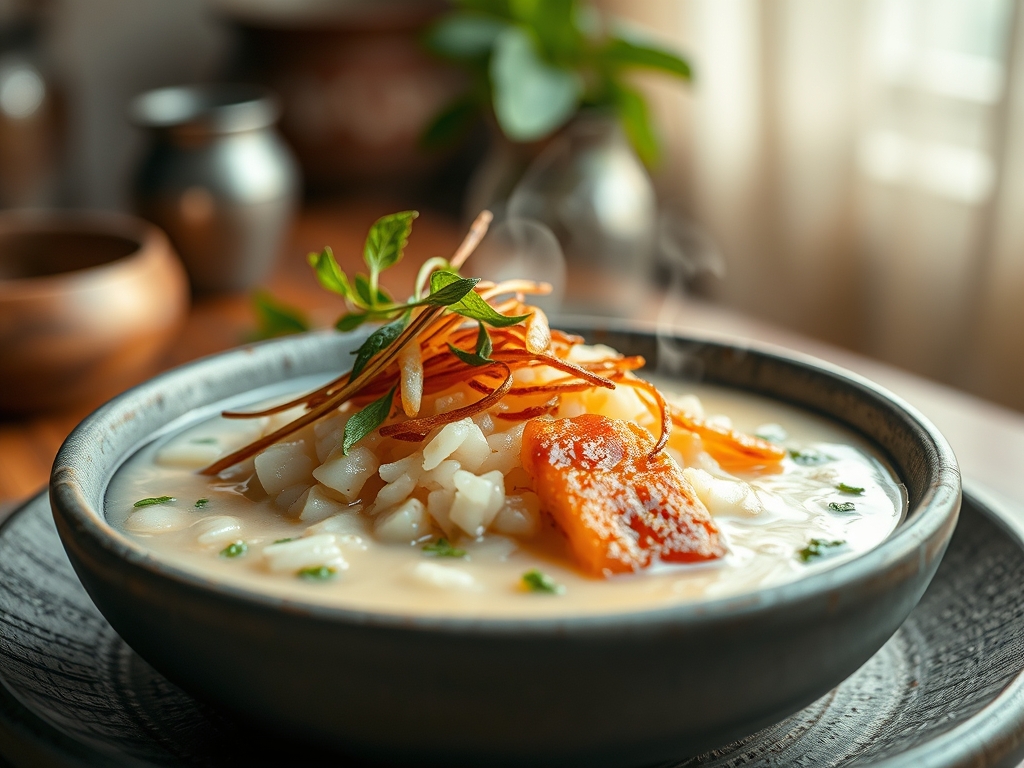
Balance is key. Pair the soft, neutral base with something piquant like pickled radish, something crunchy like fried shallots, and something salty like soy sauce or a dash of fish sauce to maximize the sensory profile.