Forget everything you know about frozen convenience bags or the flat, utilitarian spheres found in furniture store cafeterias. We are entering the realm of Swedish Meatball Logic; a rigorous architectural framework where fat ratios, pan-searing physics, and dairy-based emulsification collide to create the perfect protein globe. This is not just dinner; it is a masterclass in culinary infrastructure. To achieve the legendary Scandi Globe, one must respect the structural integrity of the panade and the volatile chemistry of the allspice-nutmeg matrix. We are looking for a specific textural profile: a resilient, bouncy exterior that yields to a velvet, aerated interior. The sauce must be more than a liquid; it must be a viscous, light-reflecting coat that clings via molecular tension. If your meatballs are crumbling or your gravy is splitting, you have violated the fundamental laws of Swedish Meatball Logic. We are here to audit your process, optimize your thermal execution, and ensure every bite delivers a piquant, savory payload that defies the laws of standard home cooking.
THE DATA MATRIX
| Metric | Specification |
|---|---|
| Prep Time | 30 Minutes |
| Execution Time | 45 Minutes |
| Yield | 30 – 35 Globes |
| Complexity (1-10) | 7 |
| Estimated Cost per Serving | $2.75 |
THE GATHERS
Ingredient Protocol:
- Protein Base: 500g / 1.1 lbs Ground Beef (20% fat) and 500g / 1.1 lbs Ground Pork.
- The Panade: 120ml / 0.5 cup Heavy Cream and 60g / 1 cup Panko Breadcrumbs.
- Aromatics: 1 Large Yellow Onion (grated) and 2 Garlic Cloves (minced).
- Spice Matrix: 5g / 1 tsp Ground Allspice, 2g / 0.5 tsp Ground Nutmeg, and 10g / 2 tsp Sea Salt.
- Binding Agent: 2 Large Eggs (room temperature).
- The Sauce Infrastructure: 60g / 4 tbsp Unsalted Butter, 40g / 0.3 cup All-Purpose Flour, 750ml / 3 cups Beef Bone Broth, and 120ml / 0.5 cup Sour Cream.
- Finishing: 30g / 2 tbsp Lingonberry Jam and 15g / 1 tbsp Fresh Parsley (minced).
Section A: Ingredient Quality Audit:
The most common failure in the Scandi Globe protocol is a lean meat ratio. If your beef is 90/10, your globes will be dry, fibrous, and structurally unsound. To fix this, you must render additional fat or incorporate a higher percentage of pork to ensure the internal temperature remains moist. Another audit point is the breadcrumbs. If using standard dry crumbs instead of Panko, the density will increase, leading to a "leaden" mouthfeel. To troubleshoot, aerate the mixture by folding in the cream-soaked crumbs gently rather than mashing them. Finally, ensure your spices are fresh. Allspice loses its volatile oils quickly; if yours smells like dust, your flavor profile will lack the necessary piquant punch.
THE MASTERCLASS

1. Hydrate the Panade
Before touching the meat, combine the Panko and heavy cream in a small bowl. Let this sit for ten minutes until it forms a thick, homogenous paste. This is the secret to the "bounce" in Swedish Meatball Logic.
Pro Tip: Use a digital scale to measure your breadcrumbs by weight. Volumetric measuring is notoriously inaccurate and can lead to a dry, crumbly meatball if the starch-to-liquid ratio is skewed.
2. The Aromatic Integration
Grate your onion directly into the meat bowl to capture all the juices. Add the garlic, eggs, and the spice matrix. Incorporate the beef and pork, mixing until just combined. Do not overwork the proteins.
Pro Tip: Use a bench scraper to portion the meat mixture evenly. Over-handling the meat with warm hands can melt the fat prematurely, ruining the emulsion before it even hits the heat.
3. Precision Spherical Engineering
Roll the mixture into 1-inch spheres. Ensure each globe is smooth and free of cracks. Chill the formed meatballs in the refrigerator for 20 minutes to set the structure.
Pro Tip: Professional kitchens use a small spring-loaded scoop to ensure every globe is identical in mass. This ensures a uniform thermal transition across the entire batch.
4. The Maillard Execution
Heat a large stainless steel skillet over medium-high heat. Add a thin layer of oil and sear the meatballs in batches. You are looking for a deep, mahogany crust on all sides.
Pro Tip: Use a saucier or a heavy-bottomed skillet for better heat distribution. The Maillard reaction is a chemical dance between amino acids and reducing sugars; without high heat, you lose the depth of flavor.
5. Constructing the Viscous Emulsion
Remove the meatballs and drain excess fat, leaving about 2 tablespoons. Add the butter and flour to create a roux. Gradually whisk in the beef broth, scraping the bottom of the pan to deglaze the fond.
Pro Tip: Whisking constantly is non-negotiable. You are building a stable suspension. If the broth is added too fast, the flour particles will clump, resulting in a grainy, unappealing texture.
6. The Final Infusion
Return the meatballs to the pan. Simmer on low for 10 minutes. Stir in the sour cream at the very end, ensuring the sauce does not boil, which would cause the dairy to curdle.
Pro Tip: Use an instant-read thermometer to verify the internal temperature of the meatballs has reached 165 degrees Fahrenheit. This ensures safety without sacrificing the moisture content.
Section B: Prep & Timing Fault-Lines:
The primary human error in this workflow is the "crowded pan" syndrome. If you attempt to sear all 35 globes at once, the pan temperature will plummet. Instead of searing, the meat will steam in its own juices, resulting in a grey, flaccid exterior. Another timing fault-line occurs during the roux phase. If you do not cook the flour and butter for at least two minutes, the sauce will have a "raw" cereal taste that masks the delicate nutmeg notes. Always keep your beef broth at room temperature; adding ice-cold liquid to a hot roux can cause the emulsion to "shock" and break.
THE VISUAL SPECTRUM
Section C: Thermal & Visual Troubleshooting:
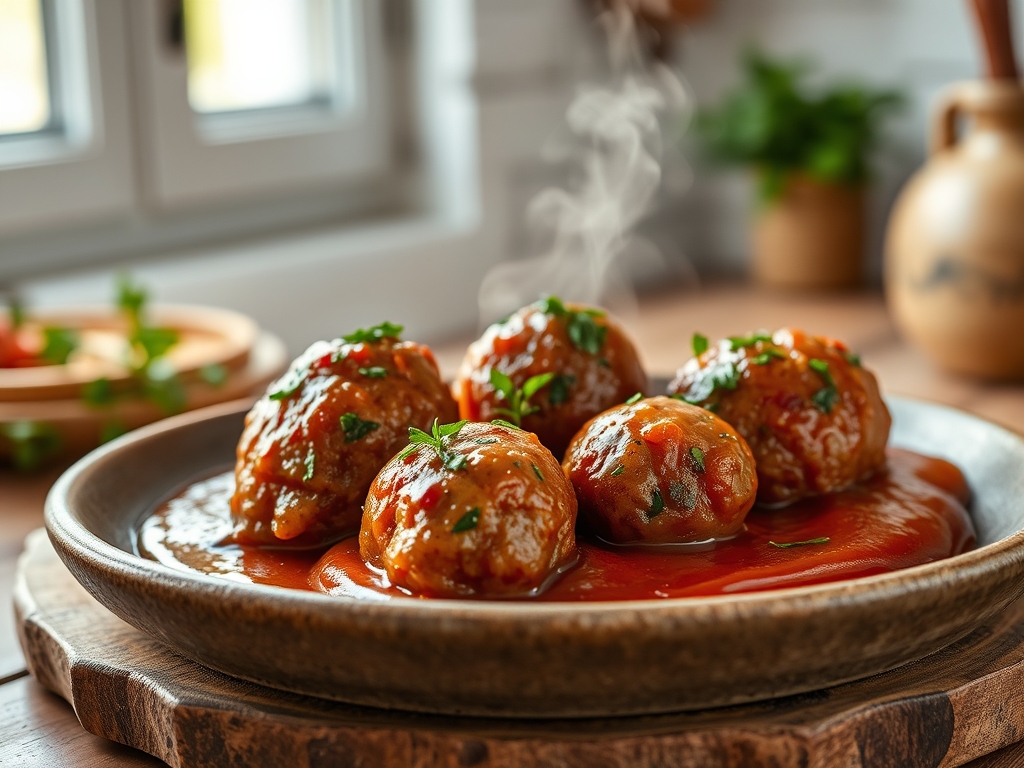
Observe the Masterclass photo above. Notice the "golden-brown halo" where the sauce meets the meatball. If your sauce looks translucent or watery, your roux was insufficient; you must simmer the sauce longer to reduce and concentrate the proteins. If the meatballs appear unevenly colored, your heat source is likely inconsistent. Rotate the pan frequently during the searing phase. A dull, matte finish on the sauce indicates a lack of fat or over-reduction. To fix this, whisk in a cold knob of butter right before serving to "mount" the sauce and give it a professional, high-gloss sheen. The final visual cue is the parsley; it should be vibrant green, not wilted. Add it only at the moment of plating.
THE DEEP DIVE
Macro Nutrition Profile:
A standard serving of five Scandi Globes with sauce contains approximately 450 calories, 32g of protein, 28g of fat, and 15g of carbohydrates. The high protein-to-carb ratio makes this an excellent recovery meal, provided the fat content is managed through high-quality sourcing.
Dietary Swaps:
- Vegan: Replace beef and pork with a mushroom-lentil base. Use coconut cream and nutritional yeast for the sauce infrastructure.
- Keto: Swap Panko for crushed pork rinds and use heavy cream exclusively instead of a flour-based roux.
- GF: Utilize certified gluten-free breadcrumbs and thicken the sauce with a cornstarch slurry or xanthan gum.
Meal Prep & Reheating Science:
To maintain molecular structure during reheating, avoid the microwave. The high-frequency waves agitate water molecules, causing the meat to toughen and the sauce to separate. Instead, reheat gently in a covered skillet with a splash of beef broth to restore the viscous nature of the gravy.
THE KITCHEN TABLE
Why are my meatballs tough?
You likely over-mixed the meat. Over-agitation develops too much myosin, creating a rubbery texture. Mix until the ingredients are just incorporated, then stop. Swedish Meatball Logic demands a gentle touch to maintain internal aeration.
Can I bake these instead of frying?
You can, but you will sacrifice the Maillard crust. If you must bake, use a high-heat convection setting and finish with a quick broil. However, you will miss the vital deglaze opportunity in the skillet.
What if my sauce is too salty?
This usually happens when using store-bought broth that reduces. To fix it, add a splash of heavy cream or a teaspoon of sugar. The fat and sweetness will neutralize the perceived saltiness on the palate.
How do I get the perfect round shape?
Chill the meat mixture thoroughly before rolling. Cold fat is easier to sculpt. If the meat sticks to your hands, lightly dampen your palms with cold water to create a non-stick barrier during the engineering phase.