Forget everything you think you know about meat on a stick. We are not merely grilling protein; we are engineering a structural masterpiece of protein cross-linking and lipid suspension. Welcome to the audit of the Beef Kofta Skewers, a dish that demands respect for the laws of thermodynamics and the delicate chemistry of myosin extraction. When you bite into a properly executed kofta, you should experience an immediate tactile release of encapsulated fats and piquant aromatics. The exterior must be a rugged, charred landscape of Maillard reactions, while the interior remains a succulent, aerated matrix of seasoned beef. This is the ultimate test of your culinary infrastructure. If your binding fails, your dinner ends up in the coals. If your seasoning is timid, your palate remains uninspired. We are here to ensure that every gram of beef is optimized for maximum flavor delivery and structural integrity. Strap in, sharpen your knives, and prepare to calibrate your kitchen for the most technically proficient skewers you have ever produced.
THE DATA MATRIX
| Metric | Specification |
|---|---|
| Prep Time | 25 Minutes |
| Execution Time | 15 Minutes |
| Yield | 6 Servings (12 Skewers) |
| Complexity | 6 / 10 |
| Estimated Cost per Serving | $3.50 – $4.50 |
THE GATHERS
Ingredient Protocol:
- 900g / 2 lbs Ground Beef (80/20 lean-to-fat ratio)
- 120g / 1 cup Yellow Onion, finely grated and drained
- 30g / 0.5 cup Fresh Parsley, minced
- 4 cloves / 20g Garlic, microplaned into a paste
- 10g / 2 tsp Kosher Salt
- 5g / 1 tsp Freshly Ground Black Pepper
- 7g / 1.5 tsp Ground Cumin
- 7g / 1.5 tsp Smoked Paprika
- 3g / 0.5 tsp Ground Cinnamon
- 2g / 0.5 tsp Cayenne Pepper
- 15ml / 1 tbsp Cold Water (to facilitate emulsion)
Section A: Ingredient Quality Audit:
The primary failure point in Beef Kofta Skewers is moisture management. If your onions are too watery, the vegetable solutes will dissolve the protein bonds and turn your skewers into mush. Technical Fix: After grating your onions, place them in a fine-mesh sieve and press firmly with a heavy spoon to expel all excess liquid. Another common issue is using beef that is too lean. Without a 20 percent fat content, the kofta will become a desiccated, fibrous mass. If you find yourself with 90/10 beef, you must manually render and incorporate 40g of chilled, minced suet or butter to restore the lipid balance. Finally, ensure your spices are toasted. Stale spices lack the volatile oils necessary to infuse the meat with deep, resonant flavor.
Step-by-Step Execution:
1. The Primary Protein Bind
Place your chilled ground beef into a large stainless steel mixing bowl. It is imperative that the meat remains below 4 degrees Celsius (40 degrees Fahrenheit) to prevent the fat from smearing. Add the salt and the 15ml of cold water. Use a heavy-duty stand mixer with the paddle attachment or your hands to vigorously knead the meat for three minutes.
Pro Tip: This process is called "primary binding." The salt and mechanical action extract myosin, a sticky protein that creates a viscous web. This web is what prevents the meat from falling off the skewer. Use a digital scale to ensure your salt ratio is exactly 1.1 percent of the meat's weight for optimal extraction.
2. The Aromatic Integration
Add the drained onions, garlic paste, minced parsley, and the full spice matrix to the bowl. Fold these ingredients into the protein web until the distribution is perfectly homogenous. Do not overwork the meat at this stage; you want to maintain some textural integrity without turning the mixture into a dense paste.
Pro Tip: Use a bench scraper to clean the sides of the bowl and ensure no pockets of dry spices remain. A consistent distribution of aromatics ensures that every bite provides a uniform piquant profile.
3. The Chilling Phase
Cover the mixture and refrigerate for at least one hour. This is not a suggestion; it is a thermal requirement. Chilling allows the fats to re-solidify and the flavors to infuse deeply into the cellular structure of the beef.
Pro Tip: A cold mixture is significantly easier to mold. If the meat is too warm, the fats will melt onto your hands, leading to a "broken" emulsion and a greasy finished product. Use an infrared thermometer to verify the meat has returned to sub-5 degree Celsius temperatures.
4. Cylindrical Architecture
Divide the meat into 12 equal portions. Take a metal skewer and mold the meat around it, creating a long, even cylinder. Ensure the ends are tapered and pressed firmly against the metal to create a mechanical seal.
Pro Tip: Wet your hands slightly with cold water before shaping to prevent sticking. Aim for a uniform thickness of 2.5cm (1 inch) to ensure even heat penetration. Professional chefs use a saucier or a small tray to keep the skewers elevated and prevent flat spots before they hit the heat.
5. Thermal Execution
Preheat your grill or cast-iron griddle to high heat (approximately 230 degrees Celsius / 450 degrees Fahrenheit). Lightly oil the grates. Place the skewers down and do not move them for the first two minutes. This allows the Maillard reaction to create a structural crust. Turn the skewers 90 degrees every two minutes until an internal temperature of 71 degrees Celsius (160 degrees Fahrenheit) is reached.
Pro Tip: Use a high-quality instant-read probe thermometer. Overcooking by even 5 degrees will cause the protein fibers to contract too tightly, squeezing out the essential juices and ruining the mouthfeel.
Section B: Prep & Timing Fault-Lines:
The most frequent human error in this protocol is the "rushed fire." If you place cold skewers onto a lukewarm grill, the meat will stick and tear, destroying the cylindrical integrity. You must wait for the "blue smoke" or a visible shimmer on the oil. Conversely, if your timing is off and the skewers sit at room temperature for too long before grilling, the internal fat will begin to render prematurely. This leads to a dry interior. Always move directly from the refrigerator to the high-heat source. If you are cooking in batches, keep the un-fired skewers in a chilled cooler.
THE VISUAL SPECTRUM
Section C: Thermal & Visual Troubleshooting:
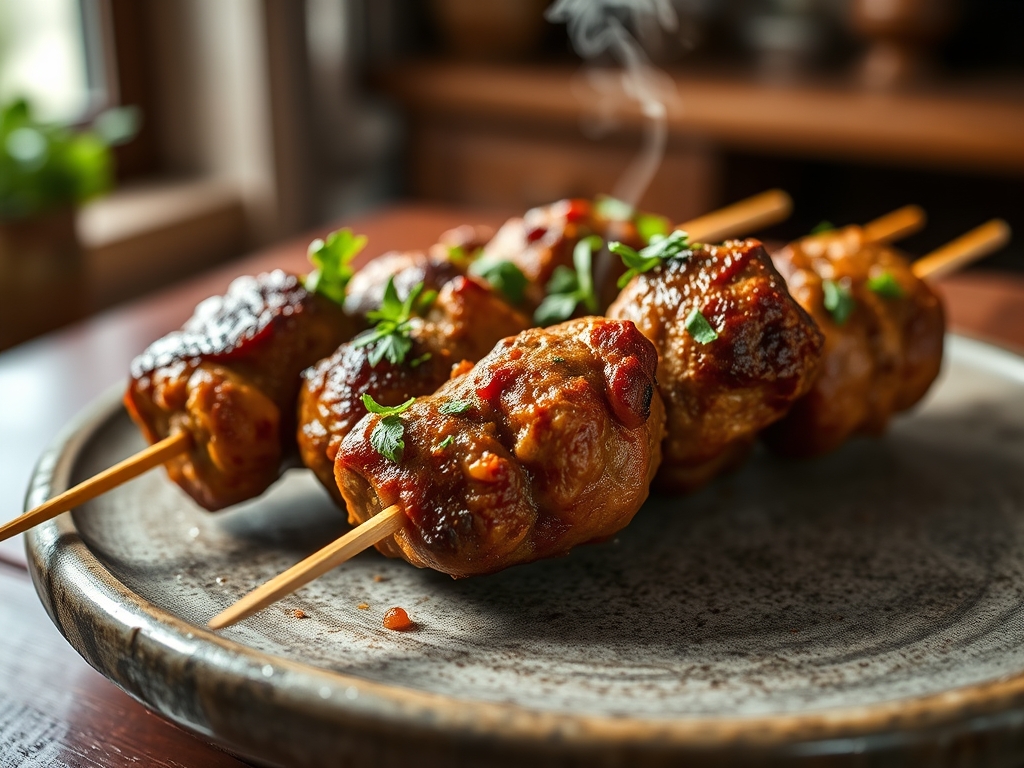
Observe the Masterclass photo above. Notice the deep, mahogany char marks and the slight glistening of the surface. If your skewers look grey or pale, your heat source was insufficient; you failed to trigger the Maillard reaction. If the meat appears "shaggy" or is falling apart, your primary protein bind was weak. To fix this, ensure you knead the meat more aggressively next time. If the interior is dull and grey rather than slightly pink and moist, you have overshot your thermal target. The visual cue for a perfect kofta is a taut, slightly "plumped" appearance, indicating that the internal steam has expanded the protein matrix without rupturing it.
THE DEEP DIVE
Macro Nutrition Profile:
Per serving (2 skewers): 320 Calories, 24g Protein, 22g Fat, 4g Carbohydrates. This profile is dominated by high-quality amino acids and essential lipids, making it an excellent choice for metabolic efficiency.
Dietary Swaps:
- Vegan: Substitute ground beef with a high-moisture pea protein crumble. Increase the binding agent by adding 15g of methylcellulose or a flaxseed slurry to maintain structure.
- Keto: This recipe is naturally ketogenic. Ensure you serve it with a high-fat tahini sauce rather than a starch-heavy wrap.
- GF: This recipe is naturally gluten-free. Avoid pre-packaged spice mixes which may contain wheat-based anti-caking agents.
Meal Prep & Reheating Science:
To maintain the molecular structure when reheating, avoid the microwave. High-frequency radiation causes uneven water excitation, leading to "rubberized" protein. Instead, use a vacuum sealer to store cooked skewers. To reheat, place the sealed bag in a 65 degree Celsius water bath for 15 minutes. This gently brings the lipids back to a liquid state without further denaturing the proteins.
THE KITCHEN TABLE
Why does my meat keep falling off the skewer?
You likely skipped the "primary bind" or your onions were too wet. Ensure you knead the salt into the meat until it becomes tacky and squeeze every drop of moisture from your aromatics before mixing.
Can I use wooden skewers instead of metal?
Yes, but you must soak them in water for at least 30 minutes. Metal is superior because it conducts heat into the center of the meat, ensuring the interior cooks at a rate consistent with the exterior.
What is the best way to get that smoky flavor?
If you aren't using charcoal, add a drop of high-quality liquid smoke or increase the smoked paprika. However, nothing beats the flavor of fat dripping onto hot coals and vaporizing back into the meat.
How do I keep the kofta from being too dense?
Do not over-compress the meat when shaping it. You want to mold it firmly enough to stay on the skewer, but leave enough micro-cavities for juices to pool and steam to circulate.