Forget the gummy, gluey messes of amateur hour. We are here to conduct a full Creamy Risotto Audit to determine if your kitchen infrastructure can handle the high-stakes physics of starch management. Making risotto is not merely cooking; it is an exercise in controlled amylopectin leaching. This is the process where short-grain rice particles rub against one another in a shallow bath of simmering liquid, shedding their outer starch molecules to create a self-emulsifying sauce. Most home cooks fail because they treat rice like a passive participant. In this kitchen, rice is the engine. We are looking for a result that is "all'onda," or wavy. When you shake the plate, the rice should move like a slow-motion tide, not a stagnant pond. We want grains that maintain a distinct structural integrity while being suspended in a luxurious, piquant velvet. If your current output resembles a stiff brick of porridge, your technical protocols are compromised. Prepare for a total system reboot as we optimize your thermal distribution and mechanical agitation techniques for the ultimate grain-based architecture.
THE DATA MATRIX
| Metric | Specification |
|---|---|
| Prep Time | 15 Minutes |
| Execution Time | 25 Minutes |
| Yield | 4 Servings |
| Complexity (1-10) | 7 |
| Estimated Cost per Serving | $3.50 |
THE GATHERS
Ingredient Protocol:
- 320g / 1.5 cups Arborio or Carnaroli Rice
- 1.2L / 5 cups Low-sodium Chicken or Vegetable Stock
- 60ml / 0.25 cups Dry White Wine (Pinot Grigio or Sauvignon Blanc)
- 50g / 3.5 tbsp Unsalted European-style Butter (cold)
- 60g / 0.75 cups Parmigiano-Reggiano (microplaned)
- 2 small / 0.5 cups Shallots (finely minced)
- 2 cloves Garlic (pressed)
- 15ml / 1 tbsp Extra Virgin Olive Oil
- 5g / 1 tsp Kosher Salt (plus more to taste)
- 2g / 0.5 tsp Freshly Cracked Black Pepper
Section A: Ingredient Quality Audit:
The primary failure point in any Creamy Risotto Audit is the rice selection. Long-grain rice lacks the necessary starch profile; using Jasmine or Basmati will result in a watery failure. If your rice looks chalky or broken in the bag, the starch will leach too quickly and create a muddy texture. Technical Fix: Always source "Superfino" grade rice. If your stock is too salty, the reduction process will concentrate the sodium to an inedible level. Technical Fix: Use a low-sodium base and season only at the final stage. If your cheese is pre-shredded, the cellulose coating will prevent a smooth emulsion. Technical Fix: Grate your cheese fresh using a microplane to ensure the particles melt instantly upon contact with the heat.
THE MASTERCLASS
1. The Thermal Foundation
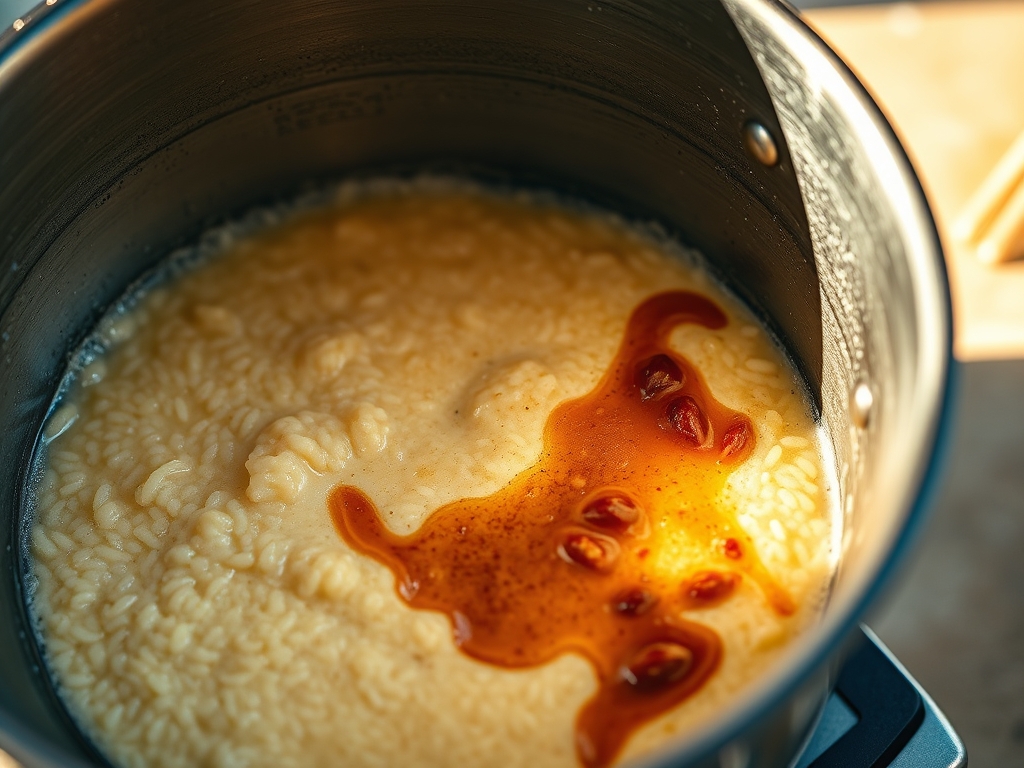
Place your stock in a separate saucepan and bring it to a low simmer. Maintaining a consistent temperature between your liquid and your cooking vessel is non-negotiable. Cold stock will shock the rice, causing the external starch to seize and preventing a smooth release. Use a digital thermometer to ensure the stock remains between 180 and 190 degrees Fahrenheit throughout the process.
Pro Tip: Use a heavy-bottomed saucier for this task. The rounded edges of a saucier prevent rice grains from getting trapped in sharp corners, ensuring every grain receives equal heat and agitation.
2. The Soffritto and Tostatura
Heat the olive oil in your main pan over medium heat. Add the shallots and sweat them until translucent but not browned. Introduce the rice grains to the dry pan. This is the "tostatura" phase, where you toast the rice for 2 to 3 minutes until the edges become translucent while the center remains opaque. This creates a thermal shell that protects the grain's structural integrity.
Pro Tip: Use a digital scale to measure your rice and aromatics. Precision in the ratio of fat to grain ensures that every particle is coated, which prevents the rice from clumping during the initial hydration.
3. The Deglaze Protocol
Pour in the white wine. The liquid will hiss and steam as it hits the hot pan. Use a wooden spoon or a heat-resistant spatula to scrape the bottom of the pan, loosening any caramelized shallot bits. Stir constantly until the wine has been fully absorbed by the rice. This step introduces acidity, which balances the heavy fats added later.
Pro Tip: A bench scraper can be used to quickly clear your cutting board of minced shallots and garlic, ensuring no debris is left behind to burn on the counter while you focus on the pan.
4. Incremental Hydration
Add the simmering stock one ladle at a time. Do not drown the rice. The liquid should just barely cover the grains. Stir frequently. This mechanical agitation is what causes the starch to rub off the rice and thicken the liquid into a sauce. Wait until the liquid is nearly gone before adding the next ladle.
Pro Tip: This is where you aerate the mixture. By stirring vigorously, you incorporate air into the starch-liquid emulsion, which lightens the texture and prevents the dish from feeling overly heavy on the palate.
5. The Mantecatura
Once the rice is al dente (firm to the bite but not crunchy), remove the pan from the heat. This is the most critical stage of the Creamy Risotto Audit. Add the cold butter and the grated cheese. Vigorously beat the mixture with a spoon. The cold fat hitting the hot starch creates a stable emulsion that results in a glossy, cream-like finish without using actual cream.
Pro Tip: Professional chefs use a "flick of the wrist" motion to toss the rice in the pan during this stage. If you are not confident in your pan-flipping skills, use a sturdy silicone spatula to fold the fats in rapidly.
Section B: Prep & Timing Fault-Lines:
Timing is the silent killer of great risotto. If you prep your shallots while the rice is already toasting, you risk burning the grains. Technical Fix: Practice mise en place; every ingredient must be measured and chopped before the heat is turned on. Another common error is the "Stirring Stasis." If you stop stirring for more than sixty seconds, the rice at the bottom will overcook and burst, while the top remains raw. Technical Fix: Maintain a rhythmic, consistent stirring motion to ensure even thermal distribution.
THE VISUAL SPECTRUM
Section C: Thermal & Visual Troubleshooting:
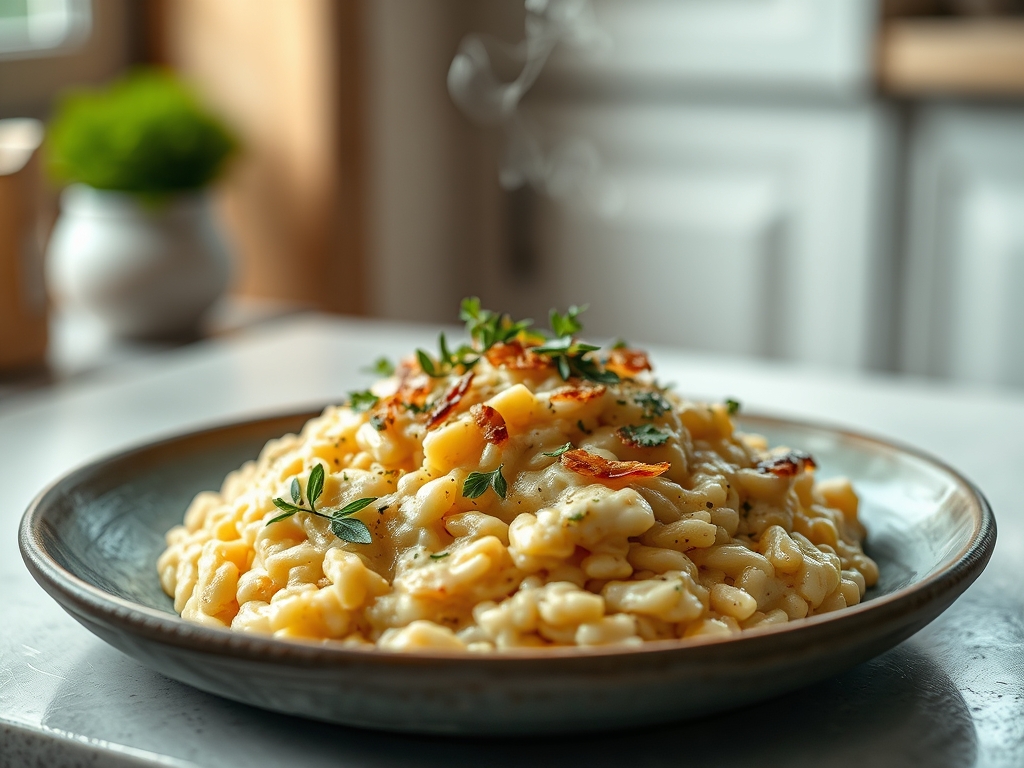
Observe the Masterclass photo above. Notice the "sheen" on the surface; this indicates a successful emulsion. If your risotto looks dull or matte, you have not added enough fat or your temperature was too low to melt the cheese properly. If the liquid is separating from the rice on the plate, the starch was not properly leached. Technical Fix: Increase agitation in the final three minutes of cooking. If the color is a muddy brown instead of a vibrant pale gold, you likely scorched your shallots or used a stock that was too dark. To fix a dull appearance, infuse a small amount of saffron or finish with a splash of bright lemon juice to "wake up" the visual profile.
THE DEEP DIVE
Macro Nutrition Profile
A standard serving of this risotto provides approximately 450 calories. It is high in complex carbohydrates (65g) and moderate in fats (18g), primarily from the butter and cheese. Protein content sits at roughly 12g per serving. While it is a high-glycemic dish, the inclusion of fats slows down the absorption of sugars.
Dietary Swaps
- Vegan: Replace butter with a high-quality olive oil or cashew cream. Substitute Parmigiano with nutritional yeast and toasted breadcrumbs for texture.
- Keto: True risotto is impossible on Keto due to the rice. However, riced cauliflower can be treated with a similar "mantecatura" technique using heavy cream and xanthan gum to mimic the viscosity.
- Gluten-Free: Naturally GF, provided your stock is certified gluten-free and contains no hidden grain-based thickeners.
Meal Prep & Reheating Science
Risotto is notoriously difficult to reheat because the starch continues to absorb moisture as it cools. To maintain molecular structure, store the risotto in an airtight container for no more than 48 hours. When reheating, add a splash of water or stock and heat gently in a saucepan while stirring. Do not use a microwave; it will cause the fats to render out and leave you with an oily, separated mess.
THE KITCHEN TABLE
Why is my risotto crunchy after 20 minutes?
Your heat was likely too high, causing the liquid to evaporate before it could penetrate the grain's core. Lower the flame and increase the liquid volume slightly for the final five minutes of the cook.
Can I use a pressure cooker?
You can, but you sacrifice the mechanical agitation required for a true emulsion. A pressure cooker creates "cooked rice in sauce," whereas the manual method creates a unified, viscous structure that is far superior in mouthfeel.
What wine is best for deglazing?
Always choose a high-acid, dry white wine. Avoid anything "oaky" like certain Chardonnays, as the heat will concentrate the woody flavors and make the dish taste bitter. A crisp Sauvignon Blanc is the gold standard.
How do I know when it is done?
Perform the "smear test." Press a single grain against a flat surface. It should be smooth throughout with no hard white core, yet it should still offer a slight resistance when bitten. This is true al dente.