Listen up. We are not just making lunch; we are engineering a masterpiece of fluid dynamics and lipid stabilization. The subject of today's technical audit is the iconic Cheddar Broccoli Soup. When executed with precision, this dish is a masterclass in suspension. It is a golden, viscous river of sharp dairy and cruciferous texture that defies the laws of separation. Most home cooks produce a watery, grainy mess where the cheese breaks and the broccoli turns to grey mush. That ends now. We are hunting for that perfect piquant bite and a velvet mouthfeel that coats the palate without feeling heavy. This is about the marriage of sharp, aged proteins and the fibrous crunch of fresh florets. We will be manipulating starches, emulsifying fats, and controlling thermal variables to ensure a stable, glossy result. If you are looking for a bland, cafeteria style slurry, you are in the wrong kitchen. We are here to build a high performance vegetable suspension that commands respect from the first spoonful to the last.
THE DATA MATRIX
| Metric | Specification |
|---|---|
| Prep Time | 20 Minutes |
| Execution Time | 30 Minutes |
| Yield | 1.5 Liters (4-6 Servings) |
| Complexity (1-10) | 4 |
| Estimated Cost per Serving | $2.45 |
THE GATHERS
Ingredient Protocol:
- Unsalted Butter: 60g / 4 tbsp
- Yellow Onion (Small dice): 150g / 1 cup
- All-Purpose Flour: 35g / 1/4 cup
- Half-and-Half: 480ml / 2 cups
- Low-Sodium Chicken Stock: 480ml / 2 cups
- Fresh Broccoli Florets: 450g / 1 lb
- Carrots (Matchstick cut): 100g / 1 cup
- Sharp Cheddar Cheese (Grated): 225g / 8 oz
- Smoked Paprika: 2g / 1/2 tsp
- Dry Mustard Powder: 2g / 1/2 tsp
- Kosher Salt: To taste
- Fresh Cracked Black Pepper: To taste
Section A: Ingredient Quality Audit:
The primary failure point in Cheddar Broccoli Soup is the cheese. Pre-shredded bags are coated in cellulose and potato starch to prevent clumping. These anti-caking agents will destroy your emulsion, resulting in a gritty, sandy texture. Technical Fix: Always hand-grate a block of high-quality aged cheddar. If your broccoli smells sulfurous, it is past its prime. Technical Fix: Use only bright green, firm stalks. If the florets are yellowing, the chlorophyll has degraded, and your soup will look dull. Finally, if your half-and-half curdles upon contact, your stock may be too acidic. Technical Fix: Check the pH of your stock or temper the dairy by adding a small amount of warm liquid to the cold cream before fully integrating.
THE MASTERCLASS
Step-by-Step Execution:
1. The Aromatics and Fat Render
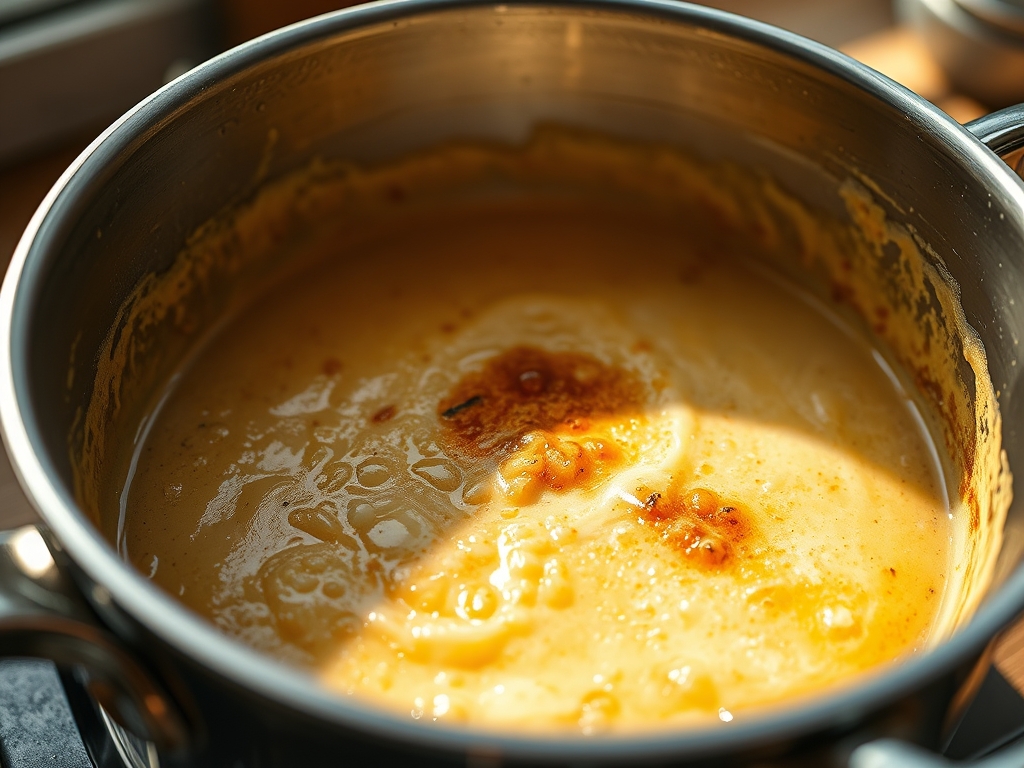
Place your saucier over medium heat and melt the butter. Add the onions and cook until translucent. Do not allow them to brown; we are looking for sweat, not caramelization. Use a digital scale to ensure your butter and flour ratios are exact for the roux.
Pro Tip: Sweating the onions slowly allows the cell walls to break down and release natural sugars without triggering the Maillard reaction. This keeps the base of the soup clean and bright.
2. The Starch Matrix (The Roux)
Sprinkle the flour over the buttered onions. Use a whisk to stir constantly for two minutes. This cooks out the "raw" flour taste while creating a blonde roux. It should look like wet sand and smell slightly nutty.
Pro Tip: The roux is your primary thickening agent. Cooking it for exactly two minutes ensures the starch granules are ready to swell and aerate without darkening the color of the final suspension.
3. Liquid Integration and Hydration
Slowly pour in the chicken stock and half-and-half while whisking vigorously. Use a bench scraper to clear any flour clumps from the edges of the pot. Bring the mixture to a gentle simmer.
Pro Tip: Gradual integration prevents the formation of lumps. The temperature differential between the hot roux and the cold dairy allows for a smoother transition into a stable liquid phase.
4. Vegetable Infusion
Add the broccoli florets and matchstick carrots. Reduce the heat to low and cover. Simmer for 15 to 20 minutes or until the broccoli is tender but not disintegrated.
Pro Tip: Simmering the vegetables directly in the dairy base allows the broccoli to infuse the liquid with its earthy flavor profile while the carrots add a subtle sweetness and structural contrast.
5. The Emulsion Finale
Turn off the heat entirely. This is critical. Add the grated cheddar one handful at a time, stirring until completely melted before adding more. Season with paprika, mustard powder, salt, and pepper.
Pro Tip: High heat is the enemy of cheese. If you boil the soup after adding the cheddar, the proteins will tighten and squeeze out the fat, causing the soup to "break" and become oily.
Section B: Prep & Timing Fault-Lines:
The most common human error is impatience during the cheese integration phase. If the liquid is boiling, the cheddar will seize. Another fault-line is the "Broccoli Disintegration Point." If you overcook the florets, they release excess water into the soup, thinning the viscosity you worked so hard to build. Use a timer. If your matchstick carrots are too thick, they will remain crunchy while the broccoli turns to mush. Consistency in knife work is not just for aesthetics; it is for uniform heat penetration.
THE VISUAL SPECTRUM
Section C: Thermal & Visual Troubleshooting:
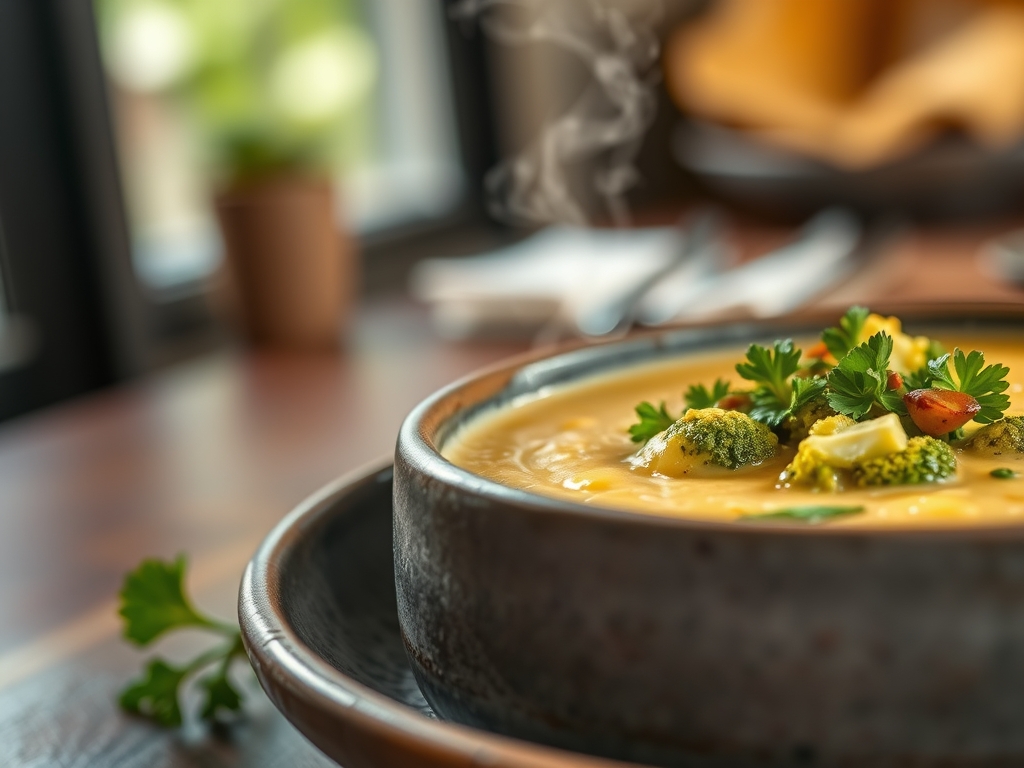
Referencing the Masterclass photo, your soup should exhibit a vibrant, sunset-orange hue punctuated by distinct, emerald-green florets. If your soup looks pale or beige, you likely skimped on the paprika or used a mild white cheddar. If the surface has an oily sheen, the emulsion has broken due to excessive heat. The Fix: Add a splash of cold heavy cream and whisk vigorously off the heat to re-emulsify. If the broccoli looks grey, you have overcooked it, destroying the chlorophyll. The Fix: Next time, blanch the broccoli separately in salted water for 60 seconds before adding it to the soup base at the very end.
THE DEEP DIVE
Macro Nutrition Profile:
A standard 350ml serving contains approximately 380 calories, 28g of fat, 16g of carbohydrates, and 14g of protein. It is a high-lipid, moderate-protein fuel source.
Dietary Swaps:
- Vegan: Substitute butter with avocado oil, half-and-half with full-fat coconut milk, and cheddar with nutritional yeast and cashew cream.
- Keto: Replace the flour roux with a pinch of xanthan gum or heavy cream reduction to lower the glycemic load.
- Gluten-Free: Use a 1:1 gluten-free flour blend or cornstarch slurry (though the latter changes the mouthfeel significantly).
Meal Prep & Reheating Science:
To maintain the molecular structure during reheating, avoid the microwave. The uneven electromagnetic waves create "hot spots" that break the cheese emulsion. Instead, reheat on the stovetop over low heat, adding a tablespoon of milk to restore the original viscosity.
THE KITCHEN TABLE
Why is my soup grainy?
You likely used pre-shredded cheese or added the cheese while the soup was boiling. The anti-caking agents or high heat caused the proteins to clump together. Always grate your own cheese and stir it in off the heat.
Can I use frozen broccoli?
Yes, but thaw and pat it dry first. Frozen broccoli has a higher water content due to ice crystal formation breaking the cell walls. If added directly, it will dilute your suspension and ruin the viscosity.
How do I make it spicier?
Add a pinch of cayenne pepper or a dash of hot sauce during the liquid integration phase. The acidity in the hot sauce can also help cut through the heaviness of the dairy, brightening the overall flavor profile.
What is the best cheese to use?
A sharp or extra-sharp cheddar provides the best flavor. Mild cheddars lack the piquant punch needed to stand up to the earthy broccoli. For a more complex profile, try a blend of 70% cheddar and 30% gruyere.