Forget everything you know about the gritty, beige sludge found in the plastic tubs of your local supermarket. We are not here to assemble a snack; we are here to conduct a comprehensive Hummus Fluidity Audit. To achieve the legendary, cloud-like texture of a Levantine masterpiece, one must view the chickpea not as a legume, but as a structural component in a high-stakes emulsion. We are chasing a specific state of matter: a viscous yet aerated suspension where solids and fats merge into a singular, silk-like medium. This process requires more than a pulse button. It demands an understanding of cellular breakdown and the chemical interplay between alkaline environments and protein denaturation. If your current dip lacks that piquant zip or feels like wet sand on the palate, your infrastructure is failing. We are about to strip your process down to the studs, optimizing heat, pH levels, and shear force to ensure your final product defies the laws of friction. Prepare for a total overhaul of your legume-based operations.
THE DATA MATRIX
| Metric | Specification |
|---|---|
| Prep Time | 20 Minutes (Excluding Soak) |
| Execution Time | 45 Minutes |
| Yield | 750ml / 3 Cups |
| Complexity (1-10) | 4 |
| Estimated Cost per Serving | $0.85 USD |
THE GATHERS
Ingredient Protocol:
- 500g / 2.5 cups Dried Kabuli Chickpeas (Do not use canned for this audit).
- 10g / 2 tsp Baking Soda (Sodium Bicarbonate).
- 240ml / 1 cup Premium Tahini (Look for Ethiopian origin for maximum fluidity).
- 60ml / 0.25 cup Fresh Lemon Juice (Cold-pressed for piquant acidity).
- 3 cloves Fresh Garlic (Microplaned into a paste).
- 5g / 1 tsp Sea Salt (Fine grain for rapid dissolution).
- 120ml / 0.5 cup Ice-Cold Water (The secret to the aeration phase).
- 30ml / 2 tbsp Extra Virgin Olive Oil (For the final garnish).
Section A: Ingredient Quality Audit:
The primary failure point in most legume dips is the age of the dried chickpea. Old legumes develop a hardened starch matrix that refuses to soften, regardless of boil time. If your beans remain grainy, your infrastructure is compromised. To fix this, increase the baking soda concentration during the soak to weaken the hemicellulose in the skins. Furthermore, if your tahini is separated and "chalky," it will ruin the emulsification. Use a digital scale to ensure the fat-to-solid ratio is precise. If the tahini is too bitter, a pinch of citric acid can balance the profile without adding excess liquid volume.
THE MASTERCLASS
1. The Alkaline Pre-Soak
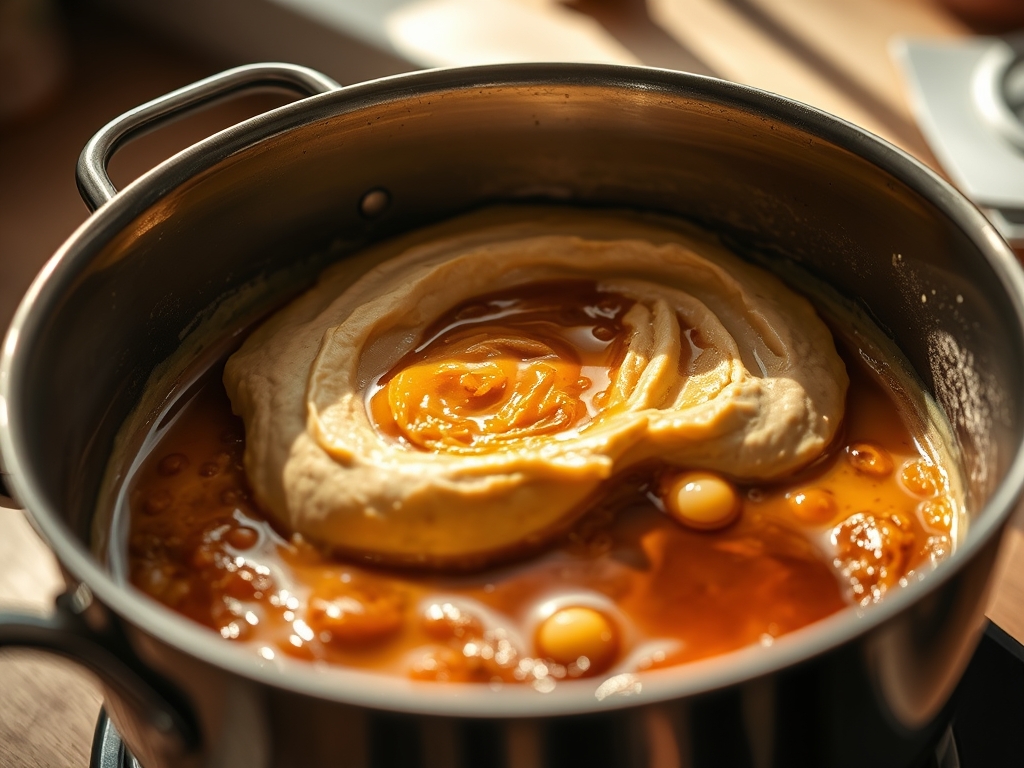
Submerge your dried chickpeas in double their volume of water and add half of your baking soda. Allow them to hydrate for at least 12 hours. This is not just about moisture; the alkaline environment begins to break down the pectin in the chickpea skins.
Pro Tip: Use a saucier or a deep stainless steel bowl for this. The science here is simple: raising the pH levels accelerates the breakdown of the cell walls, ensuring that the viscous center of the bean is accessible during the blending phase.
2. The Over-Boil Protocol
Drain the soaking water and move the beans to a heavy-bottomed pot. Add the remaining baking soda and cover with fresh water. Boil until the chickpeas are practically falling apart. You are looking for a "mushy" consistency that would be considered a failure in a salad but is a requirement for a Hummus Fluidity Audit.
Pro Tip: Use a bench scraper to clear any foam that rises to the top. The "over-cook" is essential because it ensures the starch granules are fully gelatinized, allowing them to aerate more effectively once they hit the high-speed blades.
3. The Garlic-Lemon Infusion
While the beans boil, combine your microplaned garlic and lemon juice in a small bowl. Let this sit for ten minutes. The acidity of the lemon juice "cooks" the garlic, mellowing its harsh sulfurous bite while retaining its aromatic essence.
Pro Tip: Strain this mixture through a fine-mesh sieve into your blender. This removes the fibrous garlic solids, ensuring they do not interfere with the structural integrity of your smooth emulsion.
4. The Primary Emulsification
Add the tahini to the lemon-garlic base and blend until it turns into a thick, pale paste. This is your foundation. Once the chickpeas are drained and still steaming hot, add them to the blender. The heat helps to render the fats in the tahini, creating a more stable bond.
Pro Tip: Always use a digital scale to measure your tahini. Variations in volume can drastically alter the final texture. Blending while hot prevents the starches from retrograding, which would otherwise result in a rubbery finish.
5. The Ice-Water Shear
With the blender running on high, slowly drizzle in the ice-cold water. You will watch the mixture transform from a muddy brown to a bright, ivory white. This is the "Shear" in Chickpea Paste Shear. The cold water shocks the fats and creates a micro-bubble structure.
Pro Tip: This is where you achieve peak viscous perfection. The high-velocity blades create a mechanical emulsion, and the ice water provides the temperature control necessary to keep the proteins stable while you aerate the dip into a mousse-like consistency.
Section B: Prep & Timing Fault-Lines:
Temperature control is the most overlooked variable. If you blend cold chickpeas with cold tahini, the fats will seize, resulting in a heavy, greasy mouthfeel. Conversely, if your blender motor overheats, it can "cook" the tahini, leading to a bitter aftertaste. Monitor the internal temperature of the canister. If it exceeds 60 degrees Celsius, pause the operation. Timing the lemon-garlic infusion is also critical; leave it too long and the piquant notes turn acrid; too short and the garlic remains distractingly pungent.
THE VISUAL SPECTRUM
Section C: Thermal & Visual Troubleshooting:
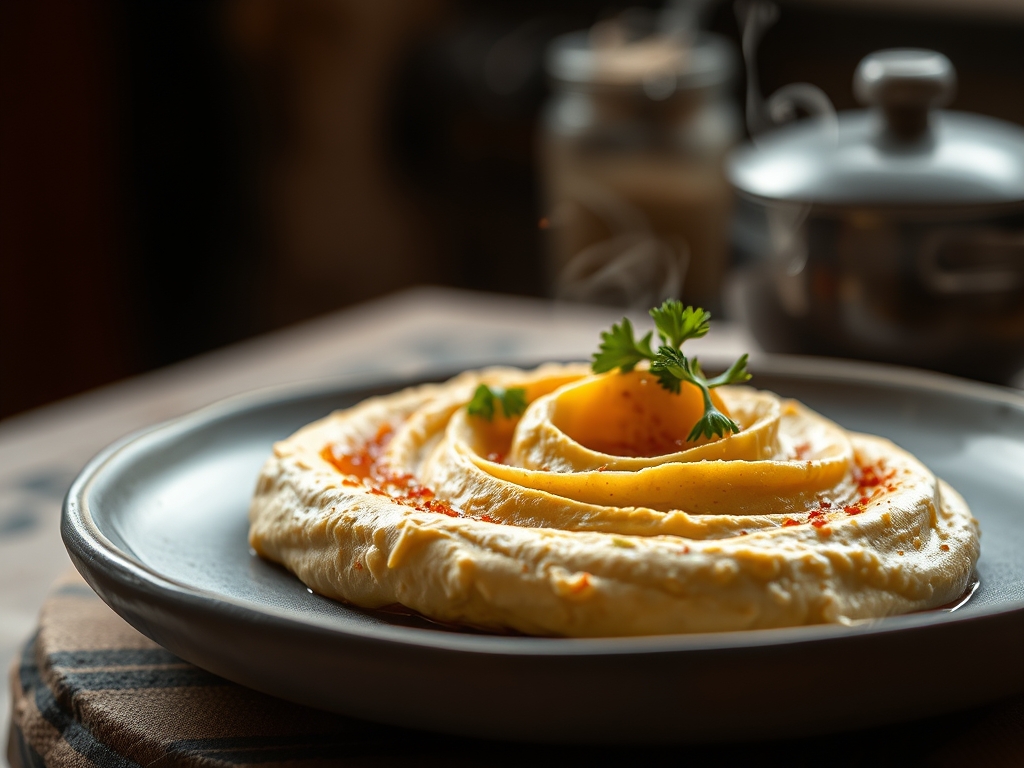
Referencing the Masterclass photo above, look for the "Satin Sheen." A successful Hummus Fluidity Audit results in a surface that reflects light evenly without appearing oily. If your dip looks dull or "matte," you have under-emulsified or lacked sufficient moisture. If you see dark flecks, your chickpeas were not cleaned properly or the skins did not fully disintegrate. The color should be a uniform pale cream. If it appears yellow, reduce the amount of olive oil integrated into the blend and save it for the garnish. The "swirl" should hold its shape but have soft, rounded edges; if the edges are jagged, the paste is too dry.
THE DEEP DIVE
Macro Nutrition Profile:
Per 100g serving, this infrastructure provides approximately 166 calories, 8g of protein, 10g of healthy fats (primarily monounsaturated), and 6g of dietary fiber. It is a nutrient-dense powerhouse designed for sustained energy release.
Dietary Swaps:
- Vegan: Naturally compliant. Ensure your tahini is processed without honey.
- Keto: Replace 50% of the chickpeas with steamed cauliflower to reduce net carbs while maintaining the viscous profile.
- GF: Naturally gluten-free. Always audit your spice sources for cross-contamination.
Meal Prep & Reheating Science:
Hummus is a living emulsion. When stored in the refrigerator, the starches will naturally firm up. To restore fluidity, do not microwave. Instead, let it reach room temperature and whisk in a teaspoon of warm water to re-activate the molecular bonds. This prevents the fats from separating and maintains the aerated structure.
THE KITCHEN TABLE
Why is my hummus grainy despite long blending?
The culprit is likely the chickpea skins or old beans. The baking soda in the boiling phase is non-negotiable for dissolving these fibers. Without it, the mechanical shear of the blender cannot overcome the structural integrity of the cellulose.
Can I use canned chickpeas for this recipe?
You can, but the audit will fail. Canned chickpeas are processed at high pressure, which locks the starch into a dense pellet. You will never achieve the same level of viscous aeration that dried, soda-soaked beans provide.
How do I achieve that bright white color?
The "whitening" is a result of the ice-water emulsion. When you rapidly incorporate cold water into the warm fat-and-starch mixture, you create millions of tiny air bubbles that refract light, shifting the color from beige to ivory.
Why does my hummus taste bitter?
This usually stems from low-quality tahini or over-processing the garlic. Ensure your tahini is fresh and well-mixed before adding. Also, ensure you are using the lemon-juice soak method to neutralize the garlic's harsh enzymes.
How long does this fresh emulsion last?
Due to the lack of preservatives, this dip is best consumed within 4 to 5 days. Keep it in an airtight container with a thin layer of olive oil on top to prevent oxidation and maintain the visual spectrum.