Listen to the roar of the fryer. It is the sound of a structural transformation where humble legumes transition from a gritty paste into a golden, aerated masterpiece. We are not merely cooking; we are performing a high-stakes audit of Falafel Ball Density. If your spheres are leaden, you have failed the hydration protocol. If they disintegrate upon impact with the oil, your structural integrity is compromised. A perfect falafel is a study in textural contrast; it requires a craggy, crystalline exterior that yields to a verdant, steaming interior. We achieve this through the precise manipulation of chickpea starch and the strategic introduction of leavening agents to aerate the mass. Forget the canned mush found in amateur kitchens. We demand raw, soaked pulses that retain their granular identity. This audit will dissect the molecular bond of the paste, ensuring your results are light enough to defy gravity yet robust enough to shatter with a satisfying crunch. Prepare your sensors for a piquant journey into the heart of Levant street food engineering.
THE DATA MATRIX
| Metric | Value |
|---|---|
| Prep Time | 24 Hours (Soaking) + 20 Mins |
| Execution Time | 15 Minutes |
| Yield | 24 – 28 Spheres |
| Complexity (1-10) | 6 |
| Estimated Cost per Serving | $0.85 USD |
THE GATHERS
Ingredient Protocol:
- 500g / 2.5 cups Dried Chickpeas (Never canned)
- 60g / 1 cup Fresh Parsley, packed
- 40g / 0.75 cup Fresh Cilantro, packed
- 100g / 1 medium Yellow Onion, roughly chopped
- 4 cloves Garlic, smashed
- 15ml / 1 tbsp Lemon Juice
- 10g / 2 tsp Cumin, toasted and ground
- 10g / 2 tsp Coriander, toasted and ground
- 5g / 1 tsp Cayenne Pepper
- 8g / 1.5 tsp Sea Salt
- 5g / 1 tsp Baking Soda
- 30g / 2 tbsp Toasted Sesame Seeds
- 1L / 4 cups Neutral High-Smoke Point Oil (Grapeseed or Peanut)
Section A: Ingredient Quality Audit:
The primary failure point in Falafel Ball Density is the moisture content of the primary legume. If using canned chickpeas, the starch is already gelatinized, resulting in a viscous sludge that cannot be aerated. Fix: Use only dried chickpeas soaked for a minimum of 18 hours in alkaline water (add a pinch of baking soda to the soak). If your herbs are wilted, they will bleed moisture into the paste rather than providing aromatic lift. Fix: Shock herbs in ice water and spin them completely dry before processing. Excess water is the enemy of the Maillard reaction and structural stability.
THE MASTERCLASS
1. The Hydration Phase
Drain your soaked chickpeas and pat them dry with industrial-grade paper towels. The legumes should have doubled in size but remain firm to the touch.
Pro Tip: Use a digital scale to ensure the weight has increased by at least 100 percent; this indicates the cell walls are sufficiently hydrated to steam from within during the fry, which is essential for internal crumb development.
2. The Fragmentation Process
Place the chickpeas, onion, garlic, and herbs into a high-capacity food processor. Pulse in short bursts until the mixture resembles coarse sand or fine bulgur.
Pro Tip: Do not over-process into a puree. You want to aerate the mixture by keeping the particles distinct. Use a bench scraper to clear the sides of the bowl between pulses to ensure a uniform grind size across the entire batch.
3. The Spice Infusion
Transfer the mixture to a large stainless steel mixing bowl. Fold in the toasted spices, salt, and lemon juice. Sprinkle the baking soda and sesame seeds over the top and mix by hand until just combined.
Pro Tip: Toasting your spices in a small saucier before grinding will infuse the oil in the seeds, unlocking fat-soluble flavor compounds that would otherwise remain dormant during the quick frying process.
4. The Stabilization Rest
Cover the mixture and refrigerate for at least 60 minutes. This allows the starch to leach out slightly and act as a natural binder, while the flavors meld and the moisture redistributes.
Pro Tip: Cold paste is easier to shape and prevents the internal temperature from rising too quickly in the fryer, which protects the delicate Falafel Ball Density from becoming a hollow shell.
5. Precision Spherical Deployment
Using a dedicated falafel scoop or a calibrated ice cream scoop, form the mixture into 30g spheres. Do not over-compress; you want a light touch to maintain the internal air pockets.
Pro Tip: If the mixture sticks to your tools, dip the scoop in water between shaped units. A bench scraper is excellent here for cleaning your workspace and ensuring no wasted paste remains on the surface.
6. The Thermal Transition
Heat your oil to exactly 190C (375F). Fry the spheres in small batches for 3 to 4 minutes until the exterior achieves a deep mahogany hue.
Pro Tip: Use an infrared thermometer or a probe to monitor oil recovery time. If the temperature drops below 175C, the spheres will absorb oil and become viscous and greasy rather than crisp and light.
Section B: Prep & Timing Fault-Lines:
The most common human error is the "Rush Factor." If you skip the refrigeration rest, the kinetic energy from the food processor keeps the proteins loose, leading to "Blowouts" in the fryer. Another timing error is overcrowding the vessel. Each sphere requires a thermal buffer zone. Adding too many at once crashes the oil temperature, leading to a saturated, heavy product that fails the density audit. Fix: Fry in batches of no more than six units to maintain thermal momentum.
THE VISUAL SPECTRUM
Section C: Thermal & Visual Troubleshooting:
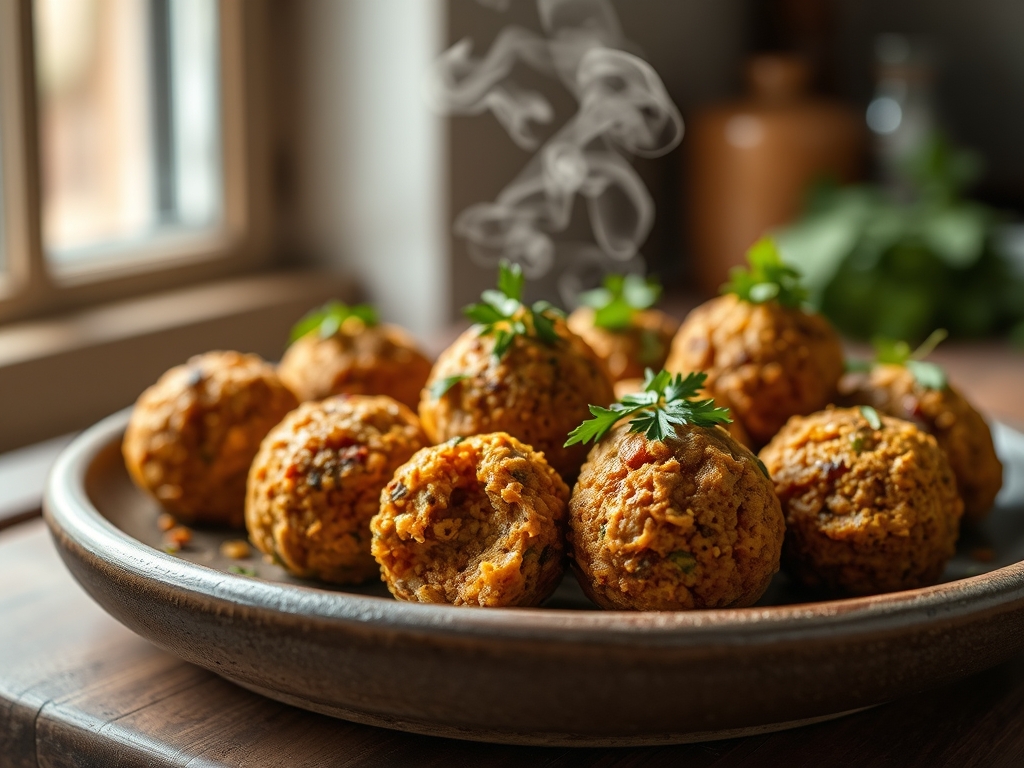
Referencing our Masterclass visual, the ideal specimen exhibits a "Ruggedized Topography." If your falafel looks smooth like a golf ball, you have over-processed the paste. If the color is pale yellow rather than rich brown, your oil temperature is too low, preventing the Maillard reaction. Fix: Increase heat and ensure your spices (like cumin) are fresh, as they contribute to the deep pigment. If the center is bright green but the outside is burnt, your spheres are too large. Fix: Calibrate your scoop to a 3.5cm diameter for optimal heat penetration.
THE DEEP DIVE
Macro Nutrition Profile:
A standard serving of four spheres provides approximately 320 calories, 12g of plant-based protein, 15g of healthy fats (from frying oil and sesame), and 8g of dietary fiber. The high fiber content ensures a low glycemic index, making this an elite fuel source.
Dietary Swaps:
- Vegan: Naturally compliant.
- Keto: Replace 50 percent of chickpeas with riced cauliflower (squeezed bone-dry) and use almond flour as a binder. Note: This will significantly alter the Falafel Ball Density.
- GF: Naturally gluten-free, provided no flour is added as a "cheat" binder.
Meal Prep & Reheating Science:
To maintain the molecular structure, never microwave leftover falafel; the steam will turn the crust into a soggy sponge. Instead, use an air fryer or toaster oven at 200C for 4 minutes. This flashes the surface moisture and re-crisps the exterior starch matrix without drying out the core.
THE KITCHEN TABLE
Why does my falafel fall apart in the oil?
Usually, this is due to excess moisture or using canned chickpeas. Ensure the legumes are raw-soaked and dried thoroughly. If the problem persists, add one tablespoon of chickpea flour to the mix to act as a structural stabilizer.
Can I bake these instead of frying?
You can, but the Falafel Ball Density will suffer. Baking creates a dense, dry puck rather than a light, crisp sphere. If you must bake, generously spray the spheres with oil and use a high-convection setting at 220C.
What is the best oil for frying?
Peanut oil is the gold standard for its high smoke point and neutral profile. Grapeseed oil is a viable secondary option. Avoid extra virgin olive oil, as it will break down and impart a bitter, scorched flavor.
How long does the raw paste last?
The paste can be stored in an airtight container in the refrigerator for up to 3 days. In fact, the flavor often improves after 24 hours as the aromatics continue to render and meld within the starch matrix.