Stop treating your breakfast like a soggy afterthought and start treating it like a high-stakes engineering project. We are moving beyond the realm of mushy bowls and entering the theater of precision fluid dynamics. Welcome to the Oatmeal Slurry Audit; a rigorous examination of beta-glucan extraction and starch gelatinization. Most home cooks commit culinary malpractice by dumping dry oats into lukewarm water and hoping for the best. That ends today. We are looking for a specific structural integrity where the liquid phase is thick enough to suspend solids but fluid enough to coat a spoon with velvet persistence. This is about the molecular interplay between heat and fiber. We are going to infuse flavor at the cellular level while managing the delicate balance of viscosity that separates a masterpiece from a bowl of wallpaper paste. If your current morning routine lacks a technical protocol, you are leaving texture on the table. Grab your digital scale and clear your station. We are about to optimize your grain intake with the clinical precision of a laboratory technician.
THE DATA MATRIX
| Metric | Specification |
|---|---|
| Prep Time | 5 Minutes |
| Execution Time | 12 Minutes |
| Yield | 2 Servings |
| Complexity (1-10) | 4 |
| Estimated Cost per Serving | $0.85 |
THE GATHERS
Ingredient Protocol:
- 180g / 2 cups Steel-Cut or Old Fashioned Rolled Oats (Avoid instant varieties).
- 475ml / 2 cups Filtered Water (The solvent for our starch extraction).
- 240ml / 1 cup Full-Fat Oat Milk or Whole Milk (To introduce lipids for a creamy emulsion).
- 2g / 0.5 tsp Malden Sea Salt (To catalyze flavor perception).
- 15ml / 1 tbsp Unsalted Grass-Fed Butter (To render a glossy finish).
- 5ml / 1 tsp Pure Vanilla Bean Paste (To infuse aromatic complexity).
- 30g / 2 tbsp Toasted Walnuts or Seeds (For structural contrast).
Section A: Ingredient Quality Audit:
If your oats smell like a dusty attic, they have oxidized. Throw them out. Low-quality oats lack the structural resilience to survive the viscous transition, resulting in a grain that disintegrates rather than softens. If your water is heavily chlorinated, it will inhibit the subtle nutty notes of the grain; use filtered water to ensure a clean slate. If your dairy or plant milk is "low fat," the mouthfeel will suffer. The Oatmeal Slurry Audit requires a specific lipid count to create a stable emulsion with the released starches. If you find your mixture is too thin, do not simply boil it longer; this destroys the grain. Instead, whisk in a small amount of pre-hydrated chia seeds to act as a natural thickening agent without compromising the flavor profile.
THE MASTERCLASS
1. The Dry Toasting Phase
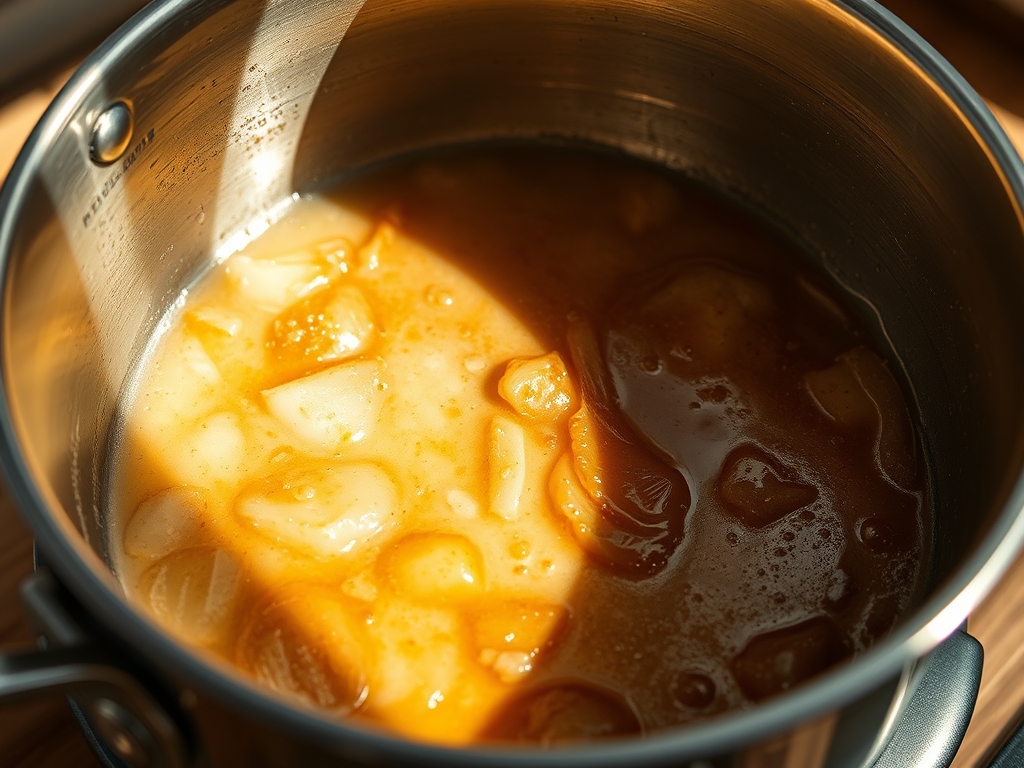
Before a single drop of liquid touches the pan, place your oats in a cold saucier and bring the heat to medium. Use a silicone spatula to constantly move the grains until they emit a popcorn-like aroma and turn a shade darker.
Pro Tip: This is a controlled application of the Maillard reaction. By toasting the dry grain, you create aromatic compounds that are not accessible through boiling alone. This step also hardens the outer starch layer, preventing the oats from becoming a monolithic block of slime.
2. The Hydration Shock
Pour your filtered water into the toasted oats all at once. The temperature differential will cause a rapid release of steam. Immediately drop the heat to a low simmer and add your sea salt.
Pro Tip: Using a digital scale for your water-to-oat ratio is non-negotiable. Volumetric measurements are prone to 15 percent error margins due to air pockets between grains. Precision hydration ensures the beta-glucans are extracted at a rate that matches the softening of the fiber.
3. The Lipid Integration
Once the water has been absorbed by sixty percent, pour in your milk and butter. This is the "Slurry" stage of the Oatmeal Slurry Audit. Use a whisk to aerate the mixture slightly as it thickens.
Pro Tip: Adding fats mid-way through the cook creates a more stable emulsion. The fats wrap around the starch molecules, providing a silky texture that lingers on the palate. A heavy-bottomed saucier is essential here to prevent the milk solids from scorching on the base of the pan.
4. The Final Tempering
Remove the pan from the heat when the mixture still looks slightly looser than your desired final result. Stir in the vanilla bean paste and let it sit, covered, for exactly two minutes.
Pro Tip: Residual heat will finish the cooking process. If you cook it to the final thickness on the stove, it will be over-hydrated and gummy by the time it hits the bowl. This resting period allows the internal pressure of the grains to equalize, ensuring a uniform bite.
Section B: Prep & Timing Fault-Lines:
Timing is the most common point of failure. If you rush the simmer, the exterior of the oat will be mushy while the interior remains chalky. If you over-stir during the water phase, you will break the grain husks and release too much starch too early, resulting in a "gluey" texture. Use a timer. Temperature control is equally vital; if the slurry boils vigorously, the proteins in the milk will denature and clump. Keep it at a gentle "smile" (the barest hint of bubbles) to maintain molecular integrity.
THE VISUAL SPECTRUM
Section C: Thermal & Visual Troubleshooting:
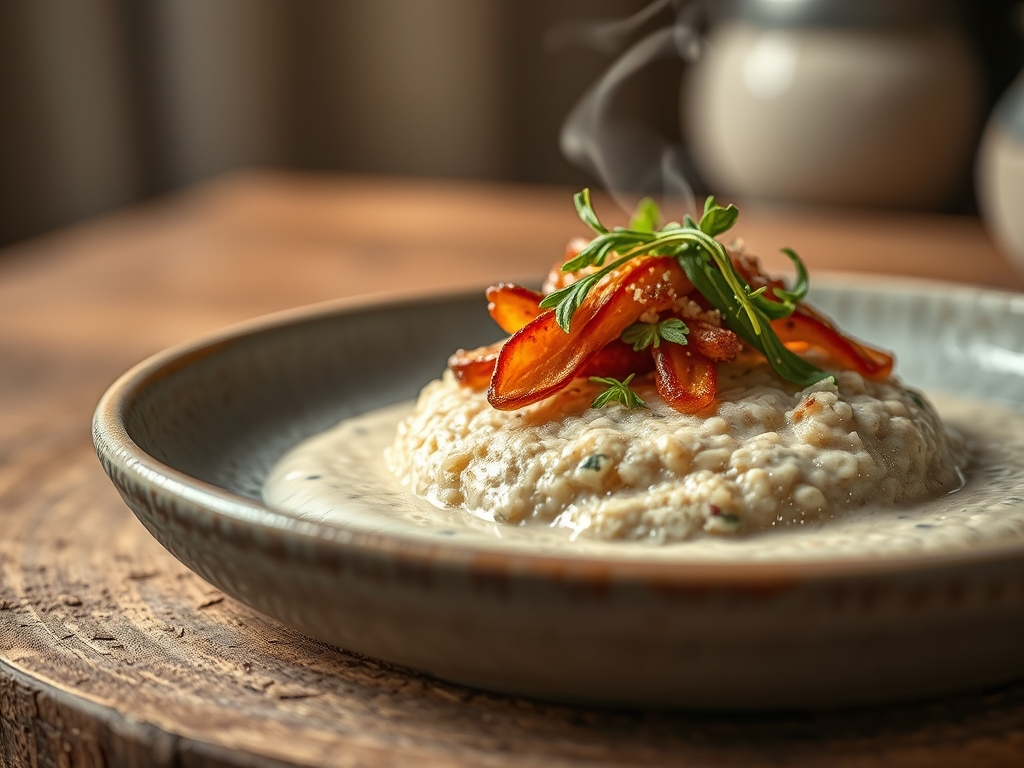
Look at the Masterclass photo above. Notice the individual definition of each grain; they are suspended in a creamy medium, not fused together. If your bowl looks like a flat, matte gray surface, you have under-toasted your grains or over-worked the starch. If you see "weeping" (water separating at the edges), your emulsion has broken, likely due to excessive heat. Fix this by whisking in a splash of cold milk to bring the temperature down and re-bind the fats. A perfect audit result shows a glossy sheen on the surface, indicating that the butter has successfully rendered into the starch matrix. The color should be a warm toasted tan, not a pale white.
THE DEEP DIVE
Macro Nutrition Profile:
A standard serving of this audited slurry provides approximately 350 calories, 12g of protein, 9g of fiber, and 14g of healthy fats. The high beta-glucan content is a functional fiber known to modulate blood glucose levels and improve cardiovascular health.
Dietary Swaps:
For a Vegan profile, substitute the butter with coconut oil and use a high-protein soy or pea milk to maintain the necessary protein-to-fat ratio. For Gluten-Free requirements, ensure your oats are certified "purity protocol" to avoid cross-contamination. A Keto version is technically impossible with oats, but a "no-atmeal" can be simulated using hemp hearts and ground flaxseeds following the same lipid-integration steps.
Meal Prep & Reheating Science:
To maintain molecular structure during reheating, do not use a microwave. The localized high-energy waves rupture the starch cells. Instead, place the cold oats in a small pot with 30ml of fresh liquid. Heat on low while gently folding the mixture. This re-hydrates the grain without turning the surrounding slurry into a rubbery solid.
THE KITCHEN TABLE
Why is my oatmeal always gummy?
You are likely over-stirring or using instant oats. Excessive mechanical agitation breaks the starch granules, releasing too much amylopectin. Switch to steel-cut and use a folding motion with a spatula instead of vigorous whisking.
Can I skip the toasting step?
You can, but you shouldn't. Toasting creates a flavor depth that compensates for the natural blandness of raw oats. It also provides a structural "shell" that ensures the grains remain distinct in the final slurry.
Is sea salt really necessary for a sweet dish?
Yes. Salt is a flavor enhancer that suppresses bitterness and heightens the perception of sweetness. Without it, the nuanced nutty notes of the toasted oats will be lost to the background.
What is the best way to add toppings?
Add them at the very end to preserve texture. If you stir nuts or seeds into the hot slurry during the cook, they will absorb moisture and lose their crunch, ruining the textural contrast we worked to build.