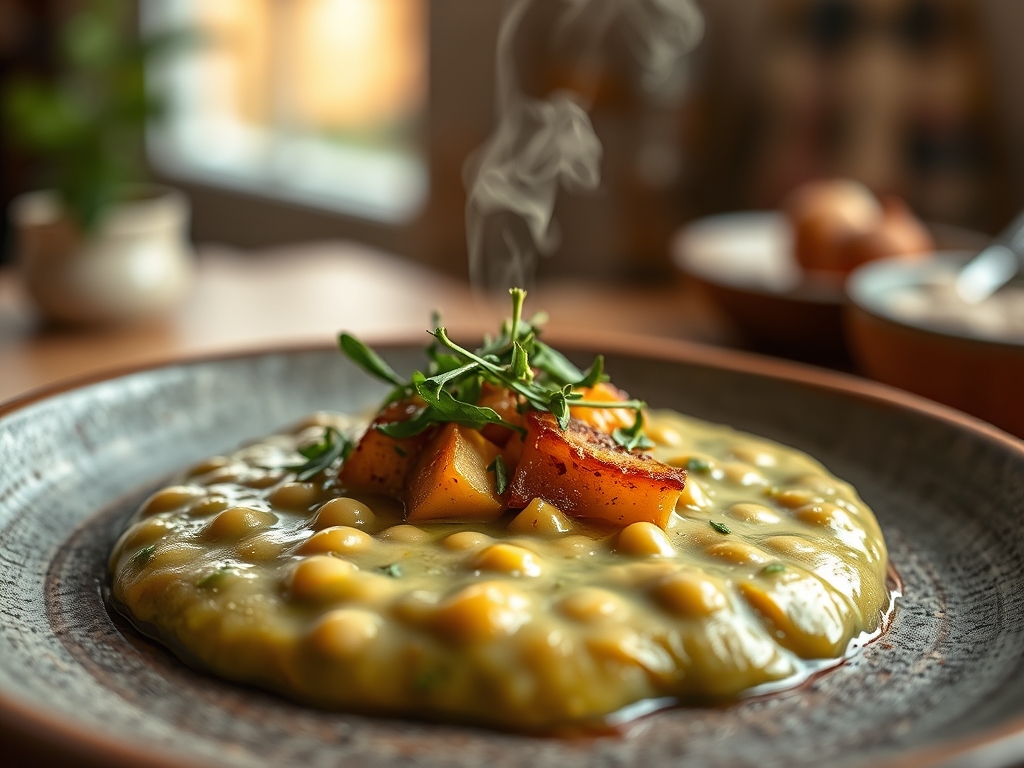
Forget the watery, uninspired sludge of cafeteria nightmares. We are here to discuss the structural integrity of the ultimate comfort matrix. When executed with precision, Split Pea Porridge is not merely a soup; it is a masterclass in amylopectin disintegration and lipid emulsification. We are looking for a texture so thick it defies gravity, a viscosity that coats the palate in a velvet shroud of savory dominance. This is about the violent breakdown of dried legumes into a smooth, homogenous suspension. We want a bowl that radiates a deep, swampy emerald hue, punctuated by the smoky, salt-cured intensity of high-quality pork. Every spoonful must deliver a piquant punch followed by a long, lingering umami finish. If your current version resembles green water with pebbles at the bottom, your infrastructure has failed. It is time to audit your process, recalibrate your thermal inputs, and transform humble dried peas into a high-performance fuel source. We are engineering a masterpiece of starch gelatinization. Strap in; we are going deep into the green.
THE DATA MATRIX
| Metric | Specification |
|---|---|
| Prep Time | 20 Minutes |
| Execution Time | 90 to 120 Minutes |
| Yield | 6 Standard Servings |
| Complexity | 4 / 10 |
| Estimated Cost per Serving | $1.15 USD |
THE GATHERS
Ingredient Protocol:
- 500g / 2.25 cups Dried Green Split Peas (Rinsed and sorted)
- 1.5L / 6 cups Filtered Water or Low-Sodium Chicken Stock
- 450g / 1 lb Smoked Ham Hock or Smoked Shank
- 200g / 1.5 cups Yellow Onion (Small dice)
- 150g / 1 cup Carrots (Small dice)
- 100g / 0.75 cup Celery (Small dice)
- 30ml / 2 tbsp Extra Virgin Olive Oil or Rendered Bacon Fat
- 3 cloves Fresh Garlic (Minced)
- 2 leaves Dried Bay Laurel
- 5g / 1 tsp Dried Thyme
- To taste: Kosher Salt and Freshly Cracked Black Pepper
- 15ml / 1 tbsp Apple Cider Vinegar (The "Brightener")
Section A: Ingredient Quality Audit:
The primary failure point in Split Pea Porridge is the age of the legume. If your peas have been sitting in a pantry since the previous administration, they will never fully soften, regardless of cook time. This is due to hard-to-cook (HTC) syndrome, where the cell walls lignify. The Fix: Add 1/2 teaspoon of baking soda to the soaking water to increase the pH; this accelerates the breakdown of hemicellulose. Furthermore, if your ham hock is overly salty, it will arrest the softening of the peas. Always blanch high-sodium smoked meats in boiling water for five minutes before integration to leach excess nitrates and salt. Finally, ensure your aromatics are fresh; limp celery provides zero structural flavor. Use a digital scale for your mirepoix to ensure the perfect 2:1:1 ratio of onion, carrot, and celery.
THE MASTERCLASS
Step 1: The Aromatic Foundation
Heat your olive oil or fat in a heavy-bottomed saucier or Dutch oven over medium heat. Add the onions, carrots, and celery. Sauté until the onions are translucent but not browned. Add the garlic and thyme in the final 60 seconds to infuse the oil without burning the delicate sulfur compounds.
Pro Tip: Use a stainless steel bench scraper to transfer your diced vegetables from the cutting board to the pot. This prevents "blade dulling" and ensures 100% yield of your prep work. Precision at this stage ensures a balanced flavor profile.
Step 2: Deglazing and Meat Integration
Increase the heat slightly and add the smoked ham hock. Allow the meat to sear for 2 minutes to render a portion of the fat. If any brown bits (fond) form on the bottom, add a splash of your liquid to deglaze the pan, scraping the bottom to incorporate those caramelized sugars back into the base.
Pro Tip: The Maillard reaction on the surface of the ham hock adds a complex smoky depth that cannot be replicated by liquid smoke. Use a heavy wooden spoon to ensure you reach every corner of the pot's radius.
Step 3: The Hydration Phase
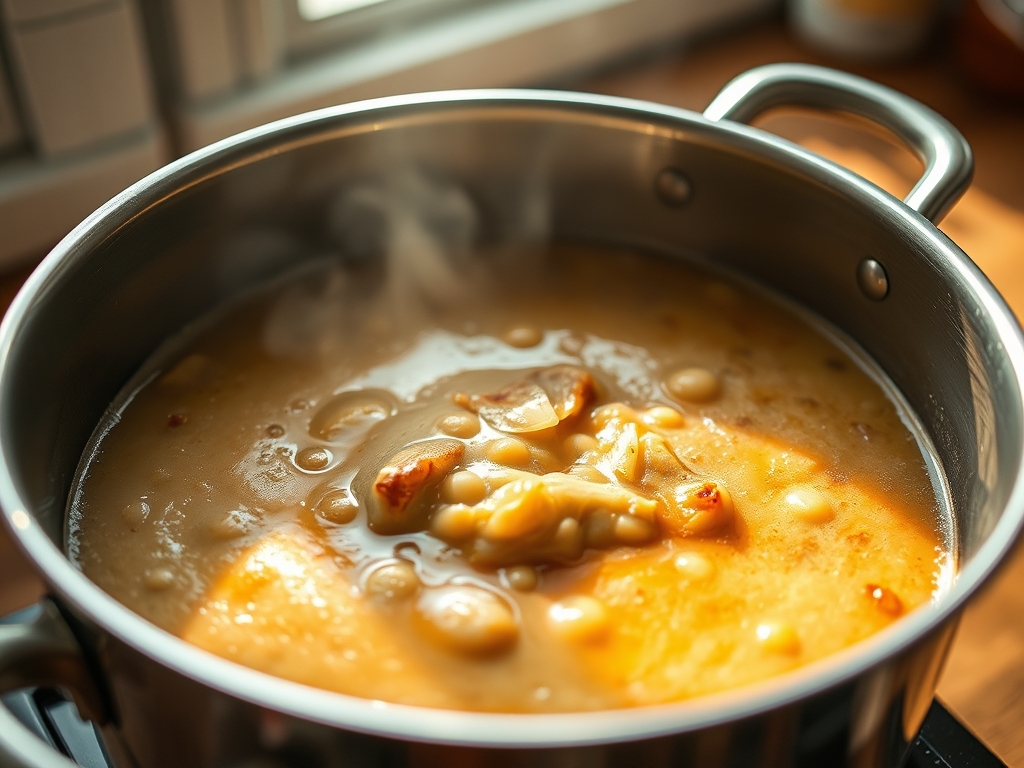
Add the rinsed split peas, bay leaves, and the remaining liquid. Bring the mixture to a rolling boil, then immediately reduce to a whisper-thin simmer. Cover the pot partially to allow for controlled evaporation, which will eventually concentrate the flavors.
Pro Tip: Use a digital thermometer to ensure your simmer stays between 185F and 205F (85C to 96C). Boiling too vigorously will shatter the peas before they are tender, resulting in a gritty rather than creamy texture.
Step 4: The Long Disintegration
Simmer for 60 to 90 minutes. Periodically stir the mixture to prevent the heavy starches from settling and scorching on the bottom of the vessel. The peas should begin to lose their shape and merge into a thick, viscous mass.
Pro Tip: If the porridge becomes too thick before the peas are fully soft, add hot water in 100ml increments. Adding cold water shocks the starches and can result in an uneven "broken" appearance in the final emulsion.
Step 5: The Refinement and Acid Spike
Remove the ham hock. Shred the meat, discarding the bone and excess fat, and return the protein to the pot. Stir in the apple cider vinegar. This acid spike is crucial; it cuts through the heavy starch and fat, providing a vibrant finish that wakes up the palate.
Pro Tip: Taste the porridge before adding salt. The ham hock provides a massive salt load; you may find that additional seasoning is unnecessary. Always season at the end of the thermal cycle to avoid over-concentration.
Section B: Prep & Timing Fault-Lines:
Timing is the silent killer of the perfect porridge. If you rush the simmer, you get "floaters" (undercooked pea fragments). If you overcook, you lose the vibrant green color, transitioning into a dull, oxidized brown. The Fix: If your peas are still hard after 90 minutes, check your water hardness. Hard water contains calcium and magnesium that bind to the pectin in the pea skins. Switch to filtered water for the next batch. Always use a timer to remind you to stir every 15 minutes; a scorched bottom will ruin the entire batch with a bitter, burnt carbon flavor.
THE VISUAL SPECTRUM
Section C: Thermal & Visual Troubleshooting:
Referencing the Masterclass photo, the ideal Split Pea Porridge should exhibit a "lava-like" flow. If your porridge looks like a dry paste, you have over-evaporated; whisk in a small amount of warm stock to aerate and loosen the matrix. If the color is a dull khaki, you likely skipped the lid or cooked it for three hours too long. To maintain the emerald hue seen in the image, ensure you are using fresh, bright green peas and avoid over-boiling. If the fat is separating and forming oily slicks on top, your emulsion has broken. Use an immersion blender for exactly five seconds to re-incorporate the fats into the starch base without turning the entire dish into a baby food puree.
THE DEEP DIVE
Macro Nutrition Profile:
A standard 400ml serving provides approximately 320 calories, 22g of protein, 45g of complex carbohydrates, and 12g of dietary fiber. It is a high-satiety, low-glycemic index powerhouse.
Dietary Swaps:
- Vegan: Replace the ham hock with 10g of smoked paprika and 15ml of liquid aminos to maintain the smoky umami profile.
- Keto: This dish is naturally high in carbs; however, increasing the ham-to-pea ratio and adding heavy cream can shift the macros, though it remains a "moderate-carb" option.
- GF: Naturally gluten-free. Ensure your chicken stock is certified.
Meal Prep & Reheating Science:
Split Pea Porridge is notorious for "setting" into a solid block in the refrigerator. This is due to starch retrogradation. When reheating, do not just microwave it. Place it in a small saucepan with 30ml of water or milk per serving. Heat slowly while whisking to re-gelatinize the starches and restore the original viscous texture.
THE KITCHEN TABLE
Why are my peas still hard after two hours?
Your peas are likely old or your water is too hard. Add a pinch of baking soda to help break down the cell walls or use filtered water to bypass mineral interference.
Can I make this in a pressure cooker?
Yes. High-pressure environments accelerate amylopectin disintegration. Cook on high pressure for 15 minutes with a natural release, but be wary of the "foam" clogging the steam vent. Always fill the pot only halfway.
How do I get that deep smoky flavor without meat?
Use a combination of smoked paprika, chipotle powder, and a dash of soy sauce. These ingredients provide the phenols and glutamates necessary to mimic the profile of a smoked ham hock.
Why did my soup turn brown?
This is the result of oxidation and overcooking. To keep it green, don't overcook the peas past the point of softening, and consider adding a handful of fresh spinach at the very end for a color boost.