Listen closely because we are about to overhaul your understanding of liquid luxury. We are moving beyond the watery, uninspired porridges of the past and entering the realm of high-performance fluid dynamics. A truly elite mushroom bisque is not a soup; it is a stabilized emulsion of fungal lipids and dairy proteins. To achieve this, we must respect the Mushroom Bisque Data. This data dictates that the difference between a dull, grey slurry and a vibrant, mahogany-toned masterpiece lies entirely in the precision of your thermal application and the management of moisture evaporation. We are hunting for a specific viscosity that coats the palate without overstaying its welcome. We want a piquant depth that triggers the deepest recesses of the umami receptors. Every gram of fungi and every milliliter of heavy cream must be accounted for in our quest for the perfect mouthfeel. Strap in and sanitize your workstations. We are about to execute a technical audit of the most sophisticated broth in the culinary canon.
THE DATA MATRIX
| Metric | Specification |
|---|---|
| Prep Time | 25 Minutes |
| Execution Time | 45 Minutes |
| Yield | 1.5 Liters (approx. 6 servings) |
| Complexity (1-10) | 7 (Requires heat management) |
| Estimated Cost per Serving | $3.25 USD |
THE GATHERS
Ingredient Protocol:
- 900g / 2 lbs Cremini or Shiitake mushrooms (cleaned and sliced)
- 45g / 3 tbsp Unsalted high-fat butter
- 240ml / 1 cup Dry sherry or fortified wine
- 1.2L / 5 cups Fortified vegetable or chicken stock
- 250ml / 1 cup Heavy cream (minimum 36% milkfat)
- 150g / 1 large Yellow onion (finely diced)
- 4 cloves Garlic (microplaned)
- 15g / 1 tbsp Fresh thyme leaves
- 10g / 2 tsp Kosher salt (adjust to taste)
- 5g / 1 tsp Freshly cracked black pepper
- 15ml / 1 tbsp Soy sauce (for umami reinforcement)
Section A: Ingredient Quality Audit:
If your mushrooms feel slimy or have a fermented odor, they are past the point of no return. Toss them. However, if they are merely slightly shriveled, they are actually prime candidates for a bisque because their water content is lower, which concentrates the flavor. If your heavy cream has begun to separate, it may still be usable for a cooked application, but check for "off" sour notes. For those using sub-par, store-bought stock that tastes like salted water, the fix is a "quick-fire reduction." Simmer the stock with a handful of dried porcini mushrooms for twenty minutes before starting the recipe to artificially inflate the umami profile.
THE MASTERCLASS
Step 1: The Maillard Initiation
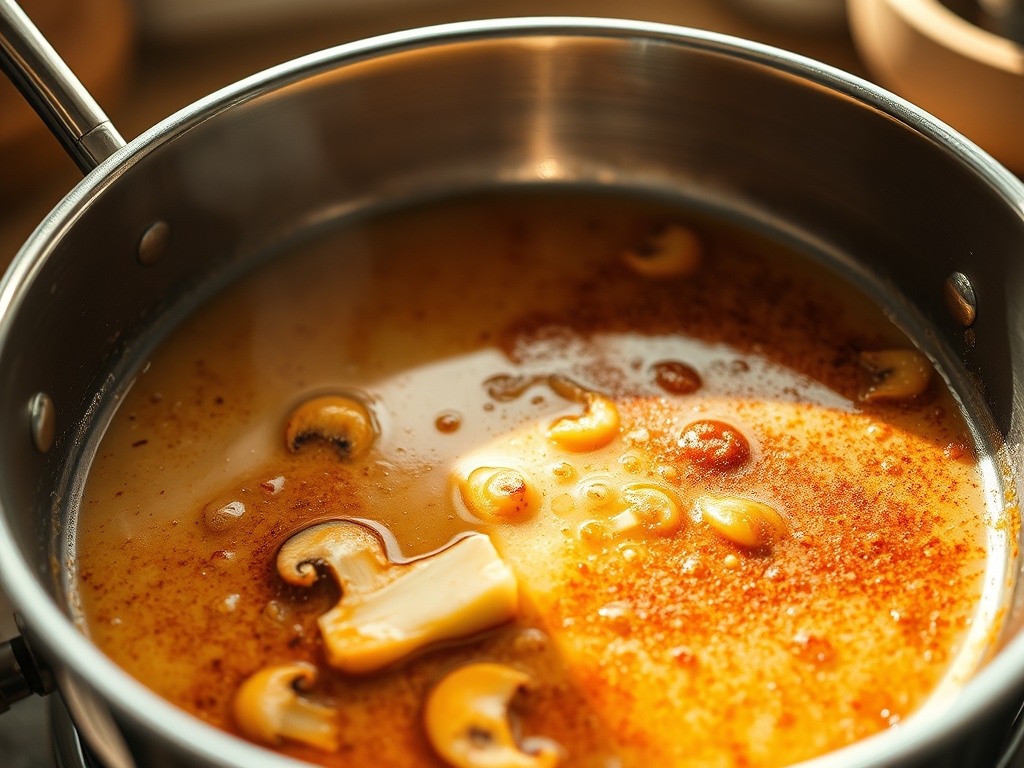
Set your heavy-bottomed saucier over medium-high heat. Add the butter and wait for the milk solids to begin foaming. Toss in the mushrooms in batches. Do not overcrowd the pan. We need to render out the moisture and achieve a deep, golden-brown sear.
Pro Tip: This is where the science of the Maillard reaction occurs. By using a bench scraper to move the mushrooms efficiently, you ensure even browning. If you stir too often, the temperature drops and the mushrooms boil in their own juice rather than searing.
Step 2: Aromatics and Deglazing
Once the mushrooms have reached a mahogany hue, add the diced onions and garlic. Sauté until the onions are translucent and have picked up the fond from the bottom of the pan. Pour in the dry sherry to deglaze.
Pro Tip: Use a wooden spoon to scrape every bit of caramelized protein from the bottom of the vessel. This "fond" contains the concentrated Mushroom Bisque Data that defines the final flavor profile. The alcohol in the sherry also acts as a solvent, releasing flavor compounds that are not water-soluble.
Step 3: Stock Infusion and Reduction
Pour in your fortified stock and the thyme. Bring the mixture to a gentle boil, then immediately reduce to a simmer. Let the liquid reduce by approximately twenty percent. This concentrates the solutes and prepares the base for emulsification.
Pro Tip: Use a digital scale to weigh your pot before and after reduction if you want to be hyper-precise about your flavor concentration. Reducing the volume ensures the final product is viscous rather than watery.
Step 4: Mechanical Emulsification
Remove the thyme stems. Using a high-powered immersion blender or a countertop vitamix, blend the mixture on the highest setting until completely smooth. While the motor is running, slowly stream in the heavy cream and soy sauce to aerate and stabilize the emulsion.
Pro Tip: High-speed blades break down the fungal cell walls (chitin), releasing more flavor and creating a silkier texture. The fat in the cream then encapsulates these particles, creating a stable colloidal suspension that feels luxurious on the tongue.
Step 5: Final Seasoning and Pass
Taste for salt and acidity. If the flavor is flat, add a drop of lemon juice or sherry vinegar. For a truly professional finish, pass the bisque through a fine-mesh chinois to remove any remaining micro-particulates.
Pro Tip: A professional chef never skips the "pass." This step ensures the texture is uniform and meets the high standards of a technical audit. Use your digital scale one last time to ensure portions are consistent for service.
Section B: Prep & Timing Fault-Lines:
The most common failure in this protocol is "thermal shock." Adding cold cream to a boiling broth can cause the proteins to denature unevenly, leading to a grainy texture. Always temper your cream by mixing a small amount of hot broth into it before adding the full volume to the pot. Another fault-line is the "garlic burn." If you add microplaned garlic at the start with the mushrooms, it will turn bitter before the mushrooms have even begun to brown. Always add aromatics only after the primary moisture has evaporated from the fungi.
THE VISUAL SPECTRUM
Section C: Thermal & Visual Troubleshooting:
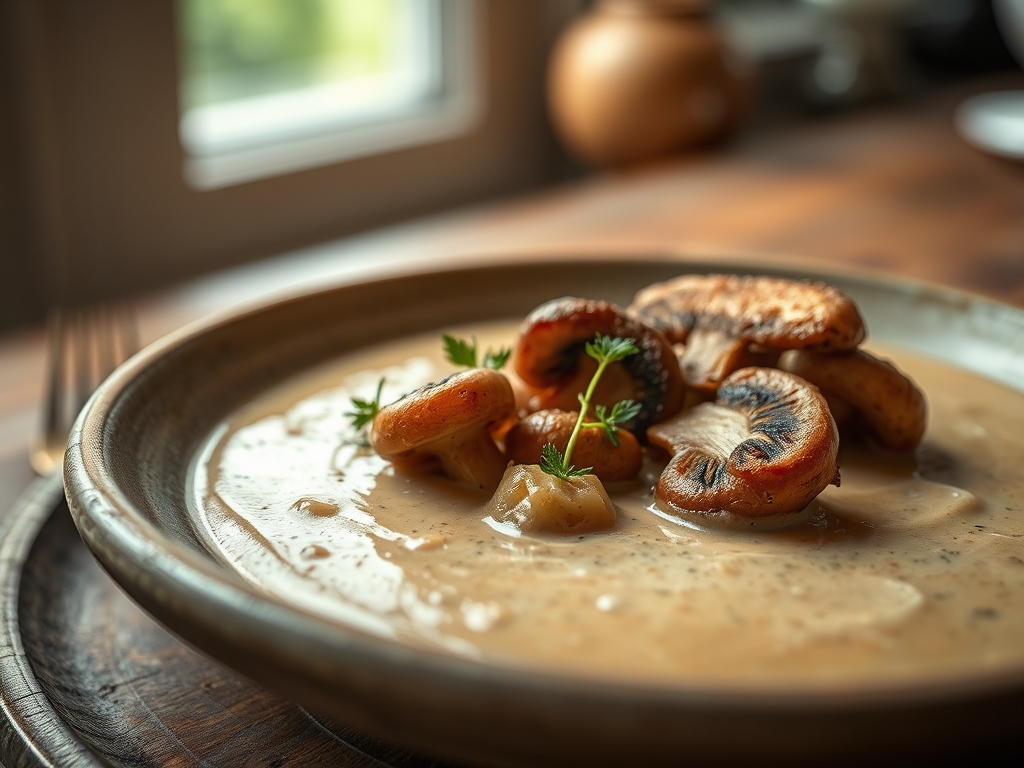
Look at the Masterclass photo. Notice the deep, earthy ochre color and the way the light reflects off the surface. If your bisque looks pale or grey, you failed to achieve a proper sear on the mushrooms in Step 1. If the soup looks "broken" or oily on top, your emulsion has failed because the heat was too high when the cream was added. To fix a broken bisque, whisk in a small "slurry" of heavy cream and a pinch of xanthan gum while blending at high speed. If the color is dull, a teaspoon of tomato paste added during the onion sauté can provide a subtle color boost without altering the primary mushroom profile.
THE DEEP DIVE
Macro Nutrition Profile:
A standard 250ml serving of this technical bisque contains approximately 280 calories. The breakdown is roughly 22g of fat (primarily from the heavy cream and butter), 12g of carbohydrates, and 6g of protein. Mushrooms are an excellent source of selenium and B vitamins, making this a nutrient-dense luxury.
Dietary Swaps:
- Vegan: Replace butter with avocado oil and heavy cream with full-fat coconut milk or a cashew-based cream. Use a dash of liquid aminos instead of soy sauce for a deeper color.
- Keto: This recipe is naturally low-carb. Ensure the sherry is "dry" to minimize residual sugars.
- Gluten-Free: This protocol uses mechanical emulsification rather than a flour-based roux, making it inherently gluten-free.
Meal Prep & Reheating Science:
To maintain the molecular structure during reheating, avoid the microwave. Rapid, uneven heating will break the fat-water bond. Instead, reheat the bisque in a small saucepan over low heat while whisking constantly. If the liquid has thickened too much in the fridge due to the starch in the mushrooms, add a tablespoon of stock to restore the original viscosity.
THE KITCHEN TABLE
Why is my bisque thin even after blending?
You likely did not reduce the stock enough before adding the cream. Simmer the blended soup for an additional ten minutes to evaporate excess water, but be careful not to scorch the dairy solids on the bottom.
Can I use dried mushrooms instead of fresh?
Yes, but they must be rehydrated first. Use the soaking liquid as part of your stock measurement to capture every bit of the Mushroom Bisque Data. Dried porcinis offer a much more intense, earthy punch than fresh creminis.
What is the best way to clean mushrooms?
Contrary to popular belief, a quick rinse is fine. Mushrooms are already 90 percent water; they won't soak up much more. Just ensure they are bone-dry before they hit the hot butter to ensure a proper sear.
How long does this stay stable in the fridge?
Due to the high dairy content, consume within three to four days. Do not freeze this bisque; the ice crystals will puncture the fat globules and the emulsion will completely separate upon thawing, leaving you with a grainy mess.