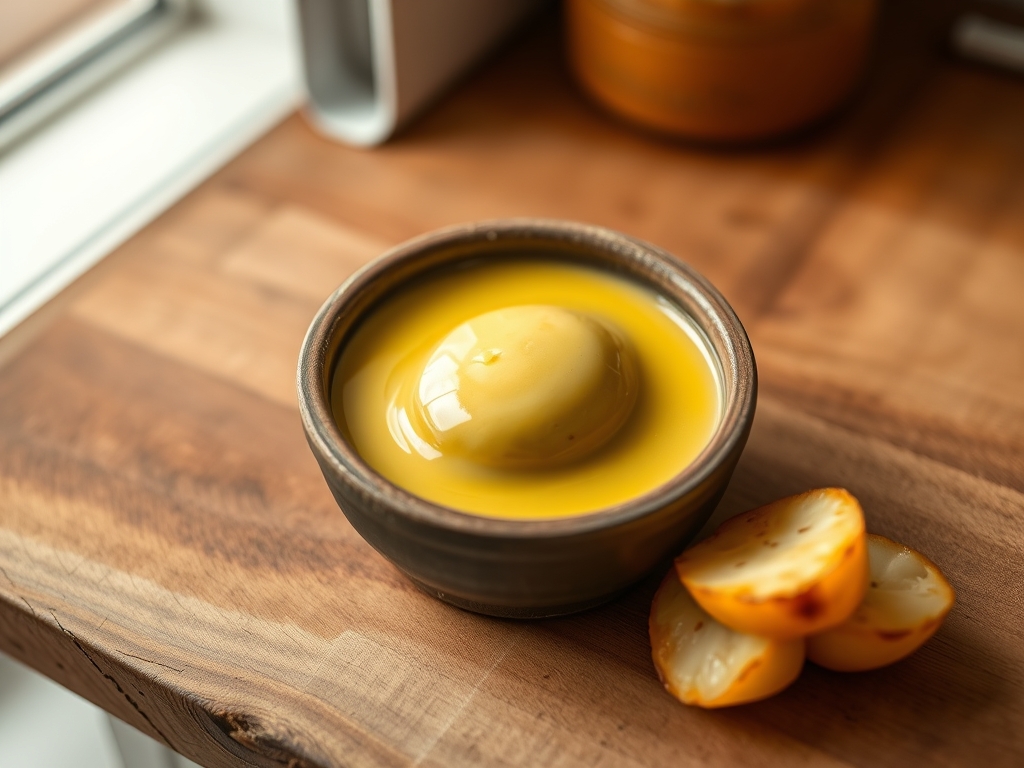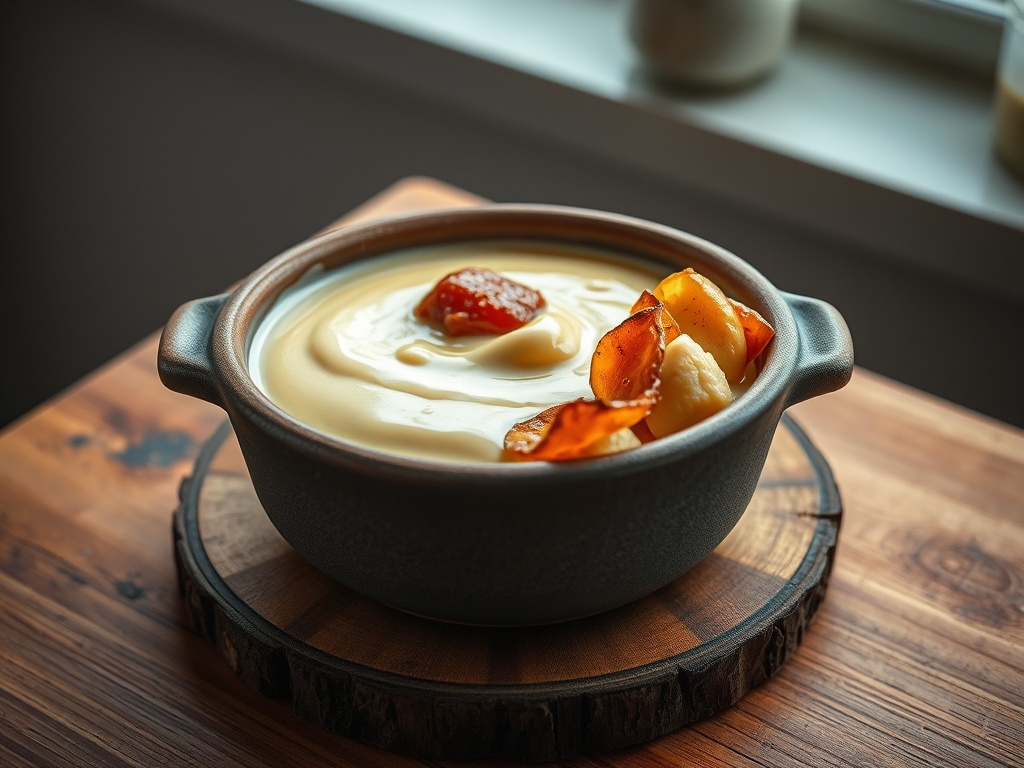
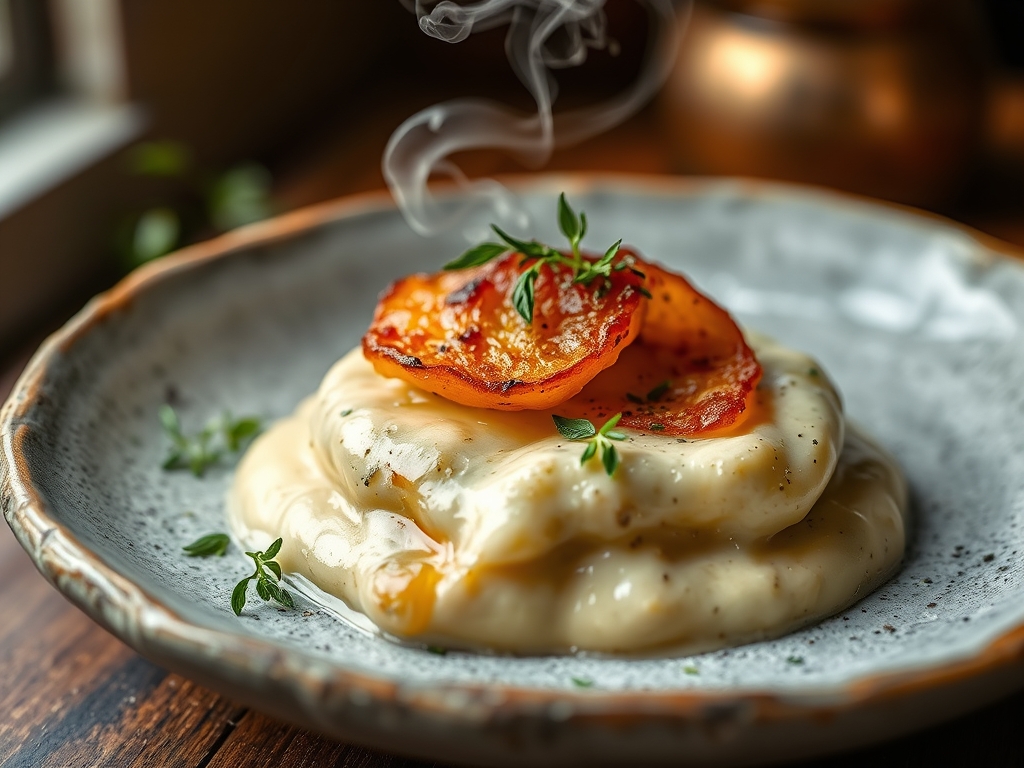
Stop settling for that lukewarm, gelatinous slurry that haunts the periphery of the Sunday roast plate. If your current condiment resembles wallpaper paste more than a culinary masterpiece, you are suffering from a systemic failure in starch management. We are here to perform a full-scale audit on the most underrated component of the traditional repertoire. Achieving the perfect Bread Sauce Texture is not a matter of luck; it is a rigorous exercise in colloidal suspension and lipid emulsification. We are talking about a sauce that possesses a velvet-like sheen and a structural integrity that clings to a fork without feeling heavy. It must be piquant enough to cut through the richness of poultry while maintaining a comforting, creamy depth. This is the ultimate test of your ability to manage gluten hydration and dairy fat stability. If you want to move beyond the bland and the lumpy, you must treat your kitchen like a laboratory. Prepare to overhaul your technique and embrace the high-stakes world of viscosity control.
THE DATA MATRIX
| Metric | Specification |
|---|---|
| Prep Time | 15 Minutes |
| Execution Time | 45 Minutes |
| Yield | 600ml / 2.5 Cups |
| Complexity (1-10) | 4 |
| Estimated Cost per Serving | $0.85 |
THE GATHERS
Ingredient Protocol:
- 500ml / 2 Cups Whole Milk (Minimum 3.5% fat content).
- 100g / 3.5 oz White Sourdough Bread, crusts removed and torn into 1cm shards.
- 1 Medium Yellow Onion, peeled and halved.
- 6 Whole Cloves.
- 1 Bay Leaf, fresh if possible.
- 10 Black Peppercorns, whole.
- 50g / 3.5 tbsp Unsalted Butter, chilled and cubed.
- 30ml / 2 tbsp Heavy Cream.
- 2g / 0.5 tsp Nutmeg, freshly grated.
- 5g / 1 tsp Maldon Sea Salt.
Section A: Ingredient Quality Audit:
Sub-par raw materials will lead to a catastrophic failure in the final viscous profile. If your milk is skimmed or 1%, the lack of lipids will cause the starch to clump rather than suspend; fix this by whisking in 15g of powdered milk to boost solids. If using stale bread that is bone-dry, it will absorb moisture unevenly. You must hydrate dry bread in a separate bowl with a splash of warm milk for five minutes before adding it to the main infusion to ensure a uniform Bread Sauce Texture. Avoid pre-ground nutmeg at all costs; the volatile oils dissipate within hours of grinding, leaving you with a dusty, one-dimensional flavor profile.
THE MASTERCLASS
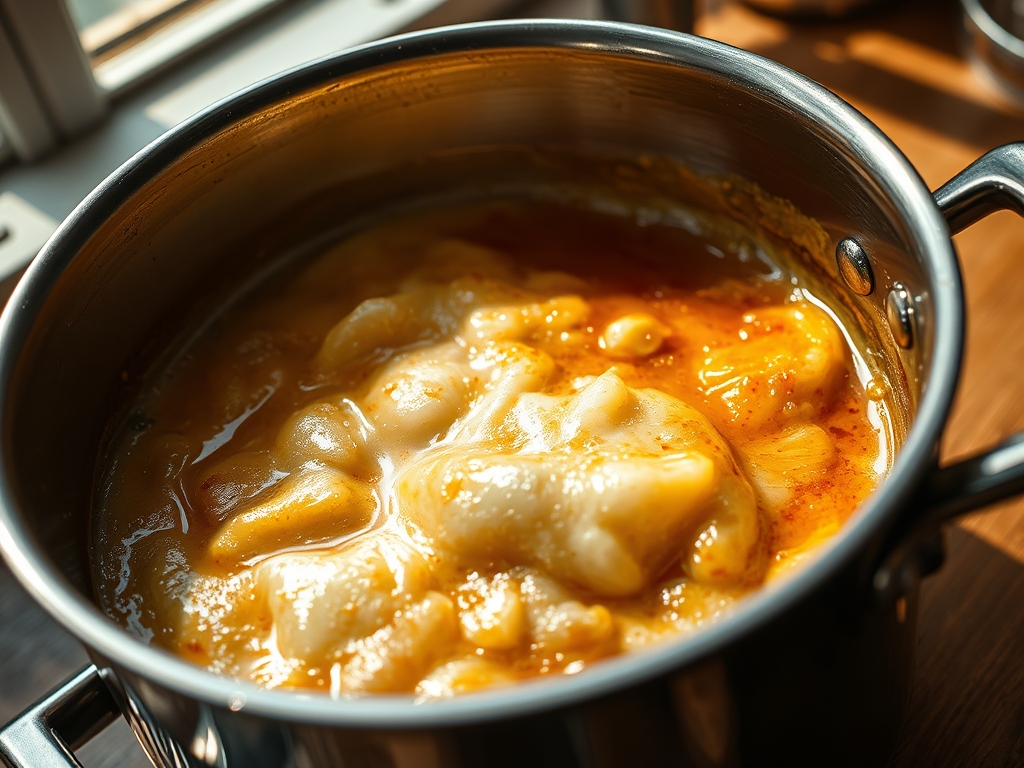
1. The Aromatic Infusion
Stud the onion halves with the cloves and place them into a heavy-bottomed saucier along with the milk, bay leaf, and peppercorns. Bring the mixture to a gentle simmer over medium heat, then immediately remove from the thermal source. Cover the pot and allow the aromatics to infuse for at least 30 minutes.
Pro Tip: Using a saucier with rounded bottom edges prevents "dead zones" where milk proteins can scorch. This step is essential for developing a complex flavor base that penetrates the starch granules later.
2. The Starch Integration
Strain the milk through a fine-mesh sieve into a clean bowl to remove the solids, then return the infused liquid to the heat. Add your sourdough shards. Use a whisk to gently break down the bread as it begins to aerate and soften. Maintain a low simmer to prevent the milk from curdling.
Pro Tip: Use a digital scale to ensure your bread-to-liquid ratio is exact. Too much bread leads to a "bready" mass; too little results in a runny failure that cannot hold its shape on the plate.
3. The Emulsification Phase
Once the bread has fully integrated and the mixture has thickened, remove from the heat. Gradually whisk in the chilled butter cubes and the heavy cream. This creates a secondary emulsion that gives the sauce its signature gloss and luxurious mouthfeel. Season with salt and freshly grated nutmeg.
Pro Tip: Cold butter added to a hot liquid creates a more stable emulsion than melted butter. This technique, known as monter au beurre, ensures a silky Bread Sauce Texture that resists separation.
Section B: Prep & Timing Fault-Lines:
The most common human error is rushing the infusion. If the milk does not spend enough time with the aromatics, the sauce will taste like wet dough. Conversely, over-boiling the bread will cause the starch molecules to shear, resulting in a slimy, "stringy" consistency. Monitor your temperature with an infrared thermometer; never let the sauce exceed 85 degrees Celsius (185 degrees Fahrenheit) once the bread is added.
THE VISUAL SPECTRUM
Section C: Thermal & Visual Troubleshooting:
Look at the Masterclass photo: notice the ivory hue and the way the sauce holds soft peaks. If your sauce is grey, your peppercorns were likely crushed rather than whole, bleeding pigment into the dairy. If the surface looks matte or dull, you have lacked sufficient fat; whisk in another 10g of butter immediately. For an uneven, lumpy appearance, pass the finished sauce through a sieve or use an immersion blender for five seconds to homogenize the particles without destroying the rustic charm.
THE DEEP DIVE
Macro Nutrition Profile:
A standard 100g serving contains approximately 180 calories, 12g of fat, 15g of carbohydrates, and 4g of protein. It is a calorie-dense accompaniment designed for satiety.
Dietary Swaps:
- Vegan: Replace milk with unsweetened cashew milk (high protein/fat content) and use a high-quality vegan butter substitute.
- Gluten-Free: Utilize a sturdy GF white loaf. Increase the butter slightly to compensate for the different starch behavior in GF flours.
- Keto: This is difficult given the bread base, but cauliflower puree thickened with heavy cream and xantham gum can mimic the profile.
Meal Prep & Reheating Science:
To maintain the molecular structure, store in an airtight container with plastic wrap pressed directly against the surface to prevent a skin from forming. When reheating, the starch will have tightened; you must add a splash of warm milk and whisk vigorously over low heat to re-establish the emulsion. Do not microwave on high power, as this will cause the fat to render out and separate.
THE KITCHEN TABLE
Why is my sauce gummy?
You likely over-worked the bread or used a high-protein bread flour loaf. The agitation released too much starch. Next time, fold the bread in gently and avoid over-whisking once the desired Bread Sauce Texture is achieved.
Can I make this 24 hours in advance?
Absolutely. In fact, the flavors of the clove and nutmeg deepen overnight. Just ensure you reheat it gently with extra dairy to loosen the cold-set starches.
What is the best bread to use?
A high-quality, open-crumb sourdough provides the best acidity and structure. Avoid cheap, plastic-wrapped white bread, which lacks the structural integrity to create a sophisticated sauce.
My sauce is too thin, how do I fix it?
Do not add more bread directly. Instead, create a small paste of butter and breadcrumbs, whisk it in, and simmer for two minutes. This ensures the new starch hydrates without creating dry lumps.