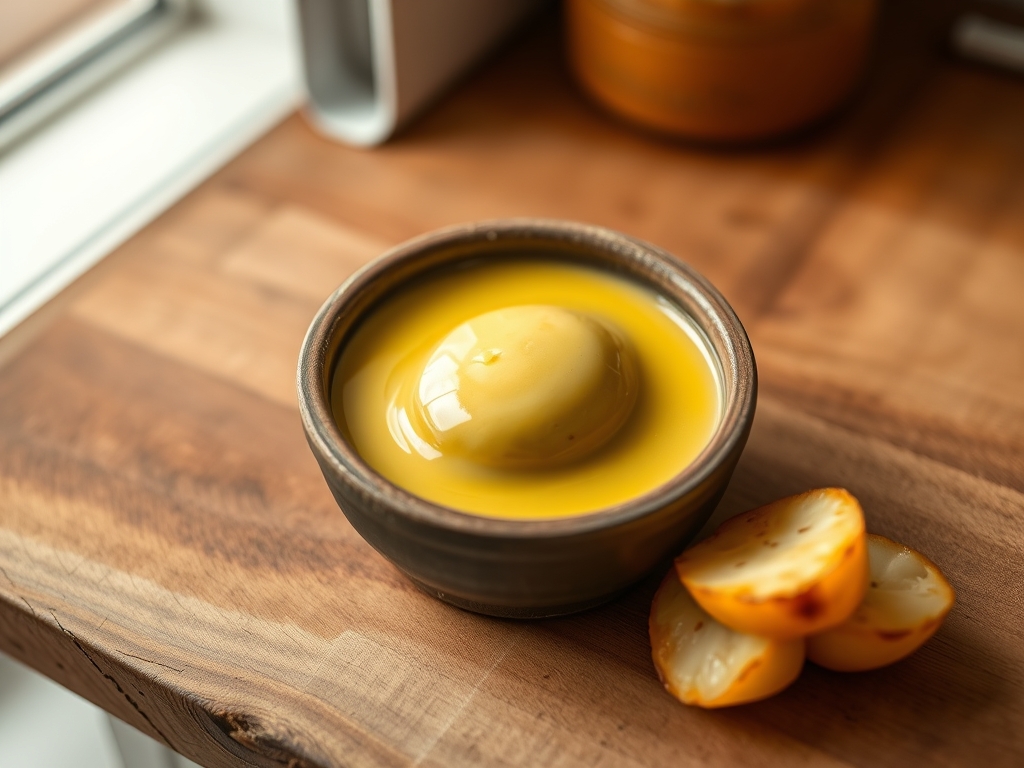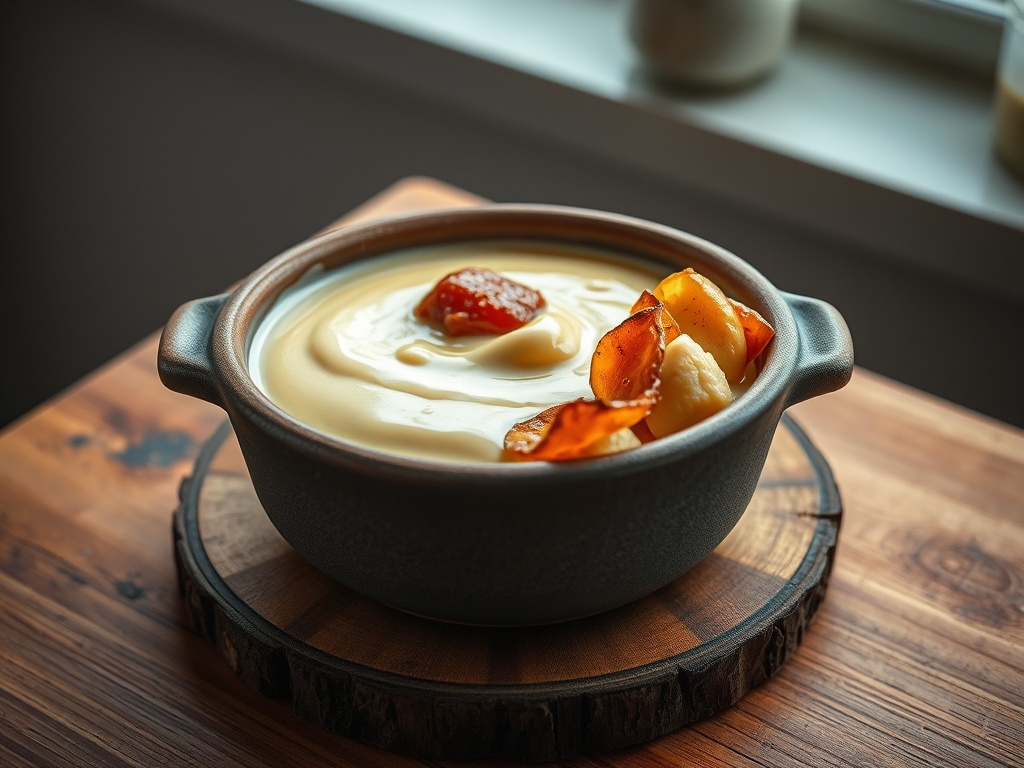
Imagine a porcelain sphere so tense with structural integrity that it vibrates under the edge of a blade. This is not mere appetizer construction; it is a high-stakes engineering feat of lipid suspension and protein elasticity. You are looking for the Burrata Core Flow. That moment of rupture occurs when the outer shell of acidified pasta filata yields to the internal pressure of stracciatella. It is a landslide of heavy cream and hand-shredded curds that must possess a specific viscosity to be considered a success. If the center is too thin, it vanishes into the plate like a puddle; if it is too thick, the sensory experience is clumpy and stagnant. We are hunting for that perfect, slow-motion lava of dairy that coats a spoon with a glossy, opaque sheen. This audit dissects the physics of the curd, the thermal requirements of the brine, and the precise moment of encapsulation. We are here to ensure that your dairy infrastructure does not just sit there; it performs with a piquant elegance that demands a standing ovation.
THE DATA MATRIX
| Metric | Specification |
|---|---|
| Prep Time | 45 Minutes |
| Execution Time | 20 Minutes |
| Yield | 4 Spheres (200g each) |
| Complexity (1-10) | 8 |
| Estimated Cost per Serving | $4.50 |
THE GATHERS
Ingredient Protocol:
- 500g / 1.1 lbs Fresh Mozzarella Curds (High moisture)
- 250ml / 1 cup Heavy Cream (Minimum 36 percent milkfat)
- 10g / 2 tsp Fine Sea Salt
- 2L / 8.5 cups Filtered Water (For the stretching bath)
- 50ml / 3.5 tbsp Extra Virgin Olive Oil (Cold pressed)
- 5g / 1 tsp Flaky Finishing Salt
Section A: Ingredient Quality Audit:
The primary failure point in Burrata Core Flow is often the cream's stability. If your heavy cream has been ultra-pasteurized at extreme temperatures, the proteins may be too damaged to properly infuse with the cheese shreds, leading to a watery separation. Fix this by sourcing vat-pasteurized cream. If your mozzarella curds feel "rubbery" or squeak excessively before heating, the pH is likely too high. You can mitigate this by allowing the curds to sit at room temperature for thirty minutes before the stretching process begins to encourage slight acidification. Finally, ensure your olive oil is not oxidized; a rancid oil will shatter the delicate profile of the fresh dairy.
THE MASTERCLASS
Step-by-Step Execution:
1. Shredding the Stracciatella Core
Begin by taking one-third of your room-temperature curds and hand-shredding them into thin, fibrous ribbons. Place these into a chilled stainless steel mixing bowl and slowly pour in the heavy cream and sea salt. Use a silicone spatula to fold the mixture until the cream begins to viscously cling to the curds.
Pro Tip: Use a digital scale to ensure the ratio of curd to cream is exactly 1:1 by weight. This precision ensures the internal pressure is consistent across all spheres, preventing premature structural failure during the sealing process.
2. Thermal Activation of the Shell
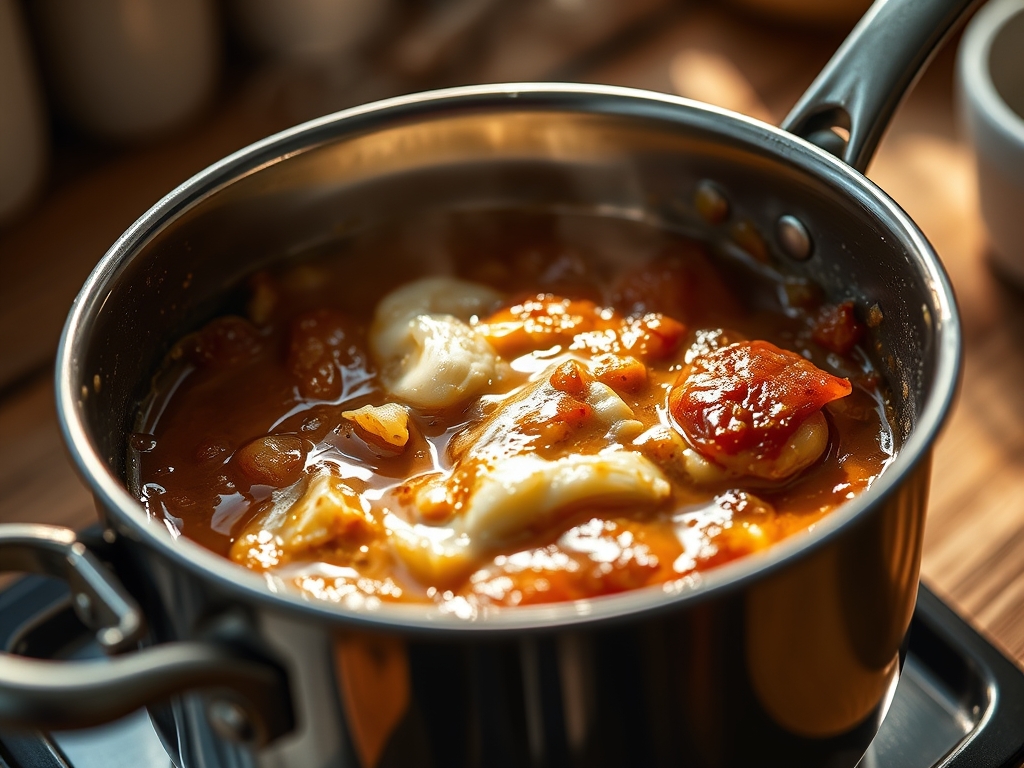
Heat your filtered water in a heavy-bottomed saucier until it reaches exactly 82 degrees Celsius (180 degrees Fahrenheit). Submerge the remaining curds in the hot water. Use a wooden paddle to gently press the curds together until they form a singular, cohesive mass that is smooth and shiny.
Pro Tip: Monitoring the temperature with an infrared thermometer is vital. If the water drops below 75 degrees Celsius, the proteins will not render pliable enough to stretch, resulting in a lumpy, unrefined shell that lacks the necessary elasticity for encapsulation.
3. The Stretch and Fold
Lift the mass from the water and begin to stretch it. Gravity is your ally here. Allow the weight of the cheese to pull it downward, then fold it back onto itself. Repeat this until the surface reflects light like polished marble. Use a bench scraper to divide the mass into four equal portions.
Pro Tip: Do not overwork the cheese. Over-stretching causes the protein strands to tighten too much, which expels moisture and creates a tough, "leathery" texture. You want just enough tension to hold the weight of the core.
4. Encapsulation and Sealing
Flatten a portion of the stretched cheese into a disk. Place a generous dollop of the stracciatella mixture into the center. Gather the edges upward, pinching them tightly at the top to create a hermetic seal. Immediately drop the finished sphere into a cold water bath to set the shape.
Pro Tip: The "top knot" or pucker of the burrata should be trimmed with sharp kitchen shears. This ensures the sphere sits evenly on the plate and prevents a thick, chewy knot of doughy cheese from ruining the textural transition.
Section B: Prep & Timing Fault-Lines:
Timing is the silent killer of the Burrata Core Flow. If the shell is too hot when you add the cold cream, the cream will thin out and lose its body, resulting in a "soupy" interior. Conversely, if the shell cools too much before you seal it, the edges will not fuse, and the sphere will leak its contents into the cooling bath. You have a window of approximately forty-five seconds from the final stretch to the final seal. Work in a warm kitchen and keep your hands slightly dampened with warm water to maintain the cheese's pliability.
THE VISUAL SPECTRUM
Section C: Thermal & Visual Troubleshooting:
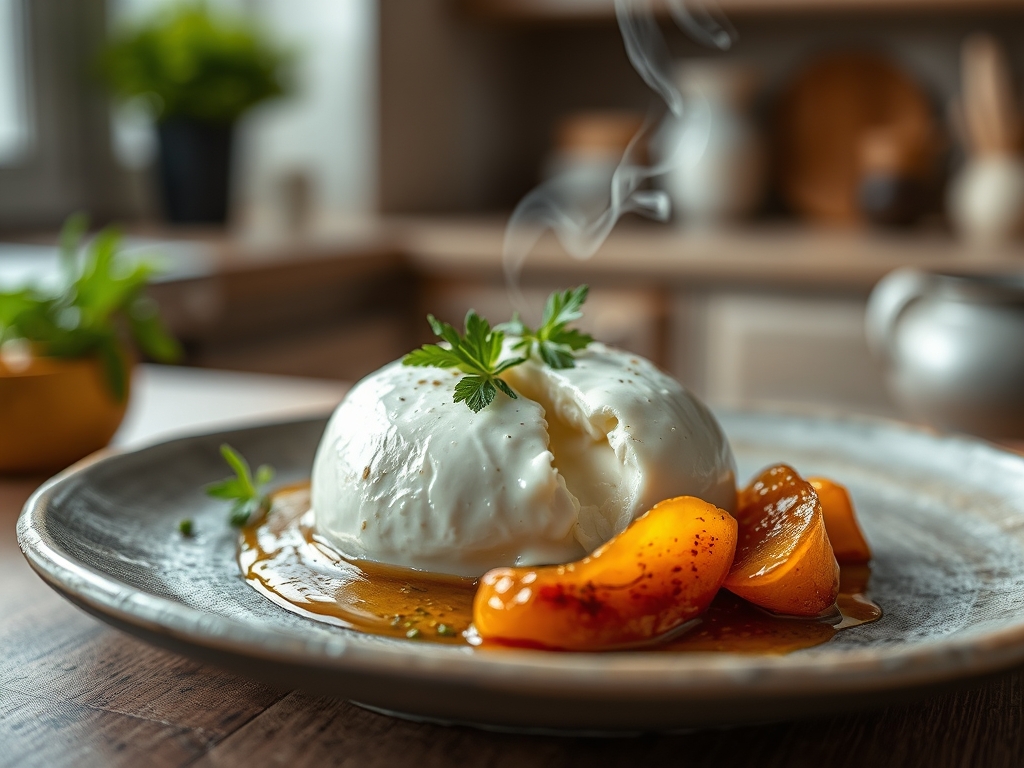
Referencing the Masterclass photo, the ideal burrata should possess a "moon-white" opacity with a satin finish. If your spheres appear translucent or yellowish, the water temperature was likely too high, causing the fats to leak out of the protein matrix. If the surface looks matte or "fuzzy," the cheese has dried out; a light brush of olive oil can temporarily restore the sheen, but the internal texture will remain compromised. For the Burrata Core Flow to look like the image, the internal cream must be thick enough to hold its shape for three seconds after the initial cut before slowly cascading across the plate. If it rushes out instantly, increase your curd-to-cream ratio in the next batch.
THE DEEP DIVE
Macro Nutrition Profile:
A single 200g serving is a powerhouse of lipids and proteins. Expect approximately 560 calories, with 48g of fat, 28g of protein, and 6g of carbohydrates. It is a high-density fuel source that relies on quality fats for its satiety.
Dietary Swaps:
For a Keto-compliant version, this recipe is already nearly perfect; simply ensure the heavy cream has no added stabilizers or sugars. For a Vegan alternative, one must transition to a cashew-based "mozzarella" using agar-agar and lactic acid for the stretch, while the core can be simulated with silken tofu blended with refined coconut oil to mimic the viscous mouthfeel of dairy cream.
Meal Prep & Reheating Science:
Burrata is a "live" structure. It does not reheat well as the heat will cause the internal cream to break and the outer shell to melt into a puddle. For meal prep, store the spheres in a light brine of salted water and consume within forty-eight hours. To serve, let them sit at room temperature for one hour; cold burrata hides its flavor and inhibits the flow of the core.
THE KITCHEN TABLE
Why is my burrata shell so tough?
The water was likely too cold during the stretching phase, or you overworked the proteins. This creates a dense, rubbery matrix. Keep the water at 82 degrees Celsius and handle the cheese with a gentle, purposeful touch.
Can I use pre-shredded cheese for the core?
No. Pre-shredded cheese is coated in potato starch or cellulose to prevent clumping. These anti-caking agents will prevent the cream from properly bonding with the cheese, ruining the viscous Burrata Core Flow you are aiming for.
My burrata burst in the cold water bath!
This indicates a failure in the sealing technique. The "pinch" at the top must be firm and immediate. If the cheese has cooled too much, it will not fuse. Try dipping just the tip into the hot water again.
How do I get that piquant flavor?
The tang comes from the acidity of the curds. If your burrata tastes bland, add a tiny drop of lemon juice or a pinch more sea salt to the stracciatella mixture before encapsulation to brighten the dairy notes.