Stop scrolling and put down the industrial tub of grainy, stabilized paste that the supermarket dare calls cheese. We are entering the realm of molecular architecture where the humble gallon of milk undergoes a violent, beautiful transformation. This is not a casual Sunday brunch project; it is a high-stakes audit of protein coagulation and thermal kinetics. When you analyze the Ricotta Cheese Data, you realize that the difference between a rubbery failure and a cloud-like masterpiece lies in the precision of your acid-heat precipitation. We are looking for a curd that is delicate yet structured, holding onto just enough moisture to feel luxurious without weeping across the plate. The aroma should be pure, sweet cream with a piquant finish from the lemon or vinegar catalyst. We are here to render the complex simple through rigorous technical oversight. If you want a result that is silky, viscous, and structurally sound, you must respect the chemistry of the dairy matrix. Let us begin the audit of your infrastructure.
THE DATA MATRIX
| Metric | Specification |
|---|---|
| Prep Time | 10 Minutes |
| Execution Time | 45 Minutes |
| Yield | 450g / 2 Cups |
| Complexity (1-10) | 3 |
| Estimated Cost per Serving | $0.85 |
THE GATHERS
Ingredient Protocol:
- 1.9 Liters / 8 Cups Whole Milk (High-quality, non-UHT)
- 475 Milliliters / 2 Cups Heavy Cream (Minimum 36% milkfat)
- 5 Grams / 1 Teaspoon Fine Sea Salt
- 60 Milliliters / 4 Tablespoons Fresh Lemon Juice or White Distilled Vinegar
Section A: Ingredient Quality Audit:
The primary failure point in ricotta production is the use of Ultra-Pasteurized (UHT) milk. The high-heat treatment denatures the proteins to such an extent that they refuse to form a cohesive curd. If your milk will not clump, you likely bought a product designed for shelf-stability rather than culinary utility. The fix is simple: source "Pasteurized" or "Vat-Pasteurized" milk. Another common audit finding is the use of bottled lemon juice. The pH level in bottled juice is often inconsistent; always use fresh lemons to ensure the correct acidity for precipitation. If your curd is too dry, your cream-to-milk ratio is likely skewed. Increase the heavy cream to infuse the matrix with more fat, which lubricates the protein strands.
THE MASTERCLASS
1. Thermal Loading and Agitation
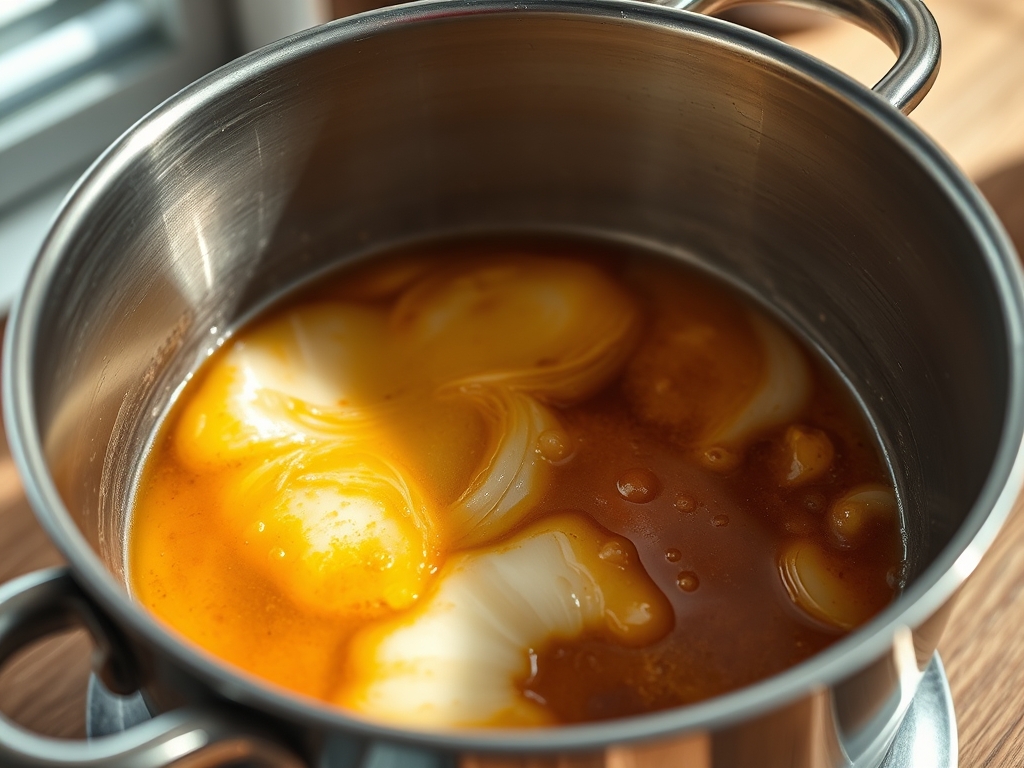
Pour your milk, cream, and salt into a heavy-bottomed saucier or stainless steel pot. Set your heat to medium and begin a slow, constant agitation with a heat-resistant spatula. You are aiming for a precise temperature of 85 degrees Celsius (185 degrees Fahrenheit). Use a digital scale to measure your ingredients beforehand to ensure the salt concentration is exact.
Pro Tip: The heavy-bottomed pot prevents localized hot spots that cause scorching. Scorched milk introduces a "burnt" flavor profile that cannot be filtered out. The science here is the Maillard reaction occurring prematurely at the base of the pan if agitation ceases.
2. The Acidic Catalyst Phase
Once you reach the target temperature, remove the pot from the heat source. Pour in your lemon juice or vinegar in a slow, steady stream. Give the mixture one gentle stir to distribute the acid, then stop immediately. Over-stirring at this stage will shatter the fragile curd structures before they can fully form.
Pro Tip: The acid lowers the pH of the milk, causing the casein proteins to lose their negative charge and clump together. By stopping the agitation, you allow these proteins to bridge and form a stable, three-dimensional lattice that traps moisture.
3. The Quiescent Period
Cover the pot and let it sit undisturbed for 15 to 20 minutes. This is the "set" phase. During this time, the whey (the translucent liquid) will separate from the white curds. If the liquid still looks milky after 20 minutes, add another teaspoon of acid and wait five more minutes.
Pro Tip: This period allows for maximum yield. Rushing this step results in "dusty" curds that pass straight through your cheesecloth. Professional chefs use this time to calibrate their bench scraper and prep the straining station.
4. The Filtration Audit
Line a fine-mesh strainer with two layers of damp cheesecloth and set it over a deep bowl. Use a slotted spoon to gently transfer the curds into the cloth. Do not pour the entire pot at once, as the weight of the liquid can compress the curds and ruin the texture. Let it drain for 5 to 30 minutes depending on your desired consistency.
Pro Tip: The longer you drain, the more viscous and firm the cheese becomes. For a spreadable ricotta, stop at 10 minutes. For a ricotta that can be stuffed into pasta, go for the full 30 minutes.
Section B: Prep & Timing Fault-Lines:
The most common human error is the "Boil Over." If you allow the milk to reach a rolling boil, the proteins become tough and rubbery. This is a temperature control failure. Always use an instant-read thermometer. Another fault-line is the "Premature Strain." If you move the curds while they are still too hot and the acid has not fully reacted, you will lose 30% of your Ricotta Cheese Data yield to the drainage bowl. Patience is a structural requirement.
THE VISUAL SPECTRUM
Section C: Thermal & Visual Troubleshooting:
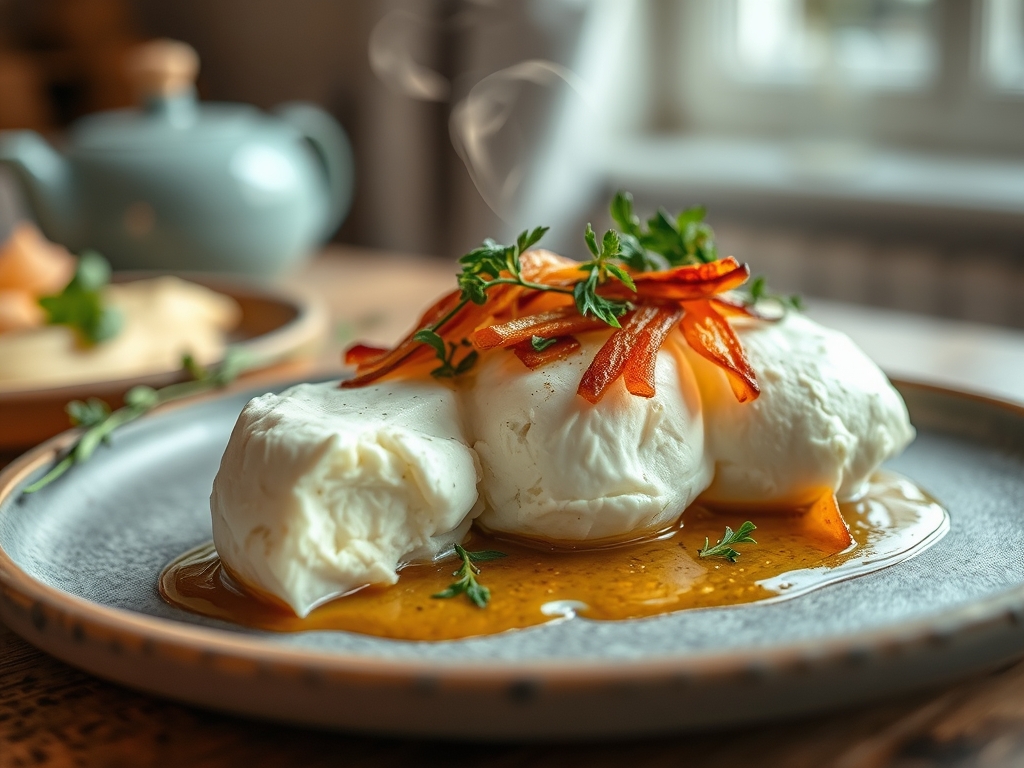
Look at the Masterclass photo: notice the distinct, popcorn-like clumps and the pale, yellowish tint of the whey. If your mixture looks like a uniform soup, your acid level was insufficient. If the curds are tiny and grainy like sand, you likely stirred too aggressively after adding the acid. To fix a dull, matte appearance, fold in a tablespoon of fresh heavy cream after straining to aerate the mixture and add a lustrous sheen. If the curds are yellowed, you have overheated the milk, causing sugars to caramelize; reduce your heat setting for the next batch.
THE DEEP DIVE
Macro Nutrition Profile:
A standard 100g serving of this artisanal ricotta contains approximately 170 calories, 12g of fat, 8g of protein, and 3g of carbohydrates. Because we are using heavy cream, the fat content is higher than commercial "part-skim" versions, which provides superior mouthfeel and satiety.
Dietary Swaps:
- Vegan: Substitute the dairy with full-fat soy milk and use lemon juice as the coagulant. Note that the protein structure will be significantly softer.
- Keto: This recipe is naturally keto-friendly. Ensure you do not add honey or sugar during the infusion phase.
- GF: Naturally gluten-free.
Meal Prep & Reheating Science:
Ricotta is a delicate emulsion. To maintain its molecular structure, store it in an airtight container for up to five days. When reheating in a dish like lasagna, the curds will naturally render some moisture. If using it as a topping, serve it cold or at room temperature to prevent the fat from separating and making the dish greasy.
THE KITCHEN TABLE
Why is my ricotta grainy instead of creamy?
Graininess is usually caused by overheating the milk or adding the acid while the milk is still over an active flame. The high heat tightens the protein bonds too quickly. Keep it at 185F for a silkier result.
Can I use the leftover liquid?
Yes! That liquid is whey. It is packed with protein and can be used to deglaze pans, added to smoothies, or used as a base for baking bread. It adds a lovely piquant depth to sourdough.
How do I make the flavor more complex?
You can infuse the milk during the heating phase. Add lemon zest, cracked black pepper, or woody herbs like rosemary. Strain these out before adding the acid catalyst to keep the texture smooth and professional.
Is vinegar better than lemon juice?
Vinegar provides a more neutral, consistent acidity. Lemon juice offers a brighter, floral note but varies in pH. For a technical audit where consistency is king, distilled white vinegar is the superior choice for reliable precipitation.