Stop treating your condiments like an afterthought; they are the architectural foundation of your plate. When we discuss a Chimichurri Suspension, we are not talking about a sloppy pile of chopped weeds swimming in a puddle of grease. We are analyzing a high-velocity, emulsified matrix where volatile aromatics are trapped within a lipid barrier to prevent oxidative browning. The goal is a piquant, vibrant green fluid that clings to the fibers of a seared protein rather than bleeding out across the ceramic. You want a sauce that screams with the acidity of red wine vinegar but maintains the silky mouthfeel of a premium cold-pressed oil. This is a technical audit of fluid dynamics and chlorophyll preservation. If your herbs are turning a dull, swampy brown within ten minutes of contact with the acid, your protocol is flawed. We are here to fix the structural integrity of your flavor profile by mastering the delicate balance of suspension, ensuring every drop delivers a concentrated burst of herbaceous energy.
THE DATA MATRIX
| Metric | Specification |
|---|---|
| Prep Time | 15 Minutes |
| Execution Time | 5 Minutes |
| Yield | 350ml / 1.5 Cups |
| Complexity (1-10) | 4 |
| Estimated Cost per Serving | $0.85 USD |
THE GATHERS
Ingredient Protocol:
- Flat-Leaf Italian Parsley: 60g / 2 cups (packed, stems removed)
- Fresh Oregano Leaves: 10g / 3 tbsp
- Garlic Cloves: 15g / 4 large cloves (peeled)
- Red Wine Vinegar: 60ml / 0.25 cups
- Extra Virgin Olive Oil: 180ml / 0.75 cups
- Red Chili Flakes: 2g / 1 tsp
- Kosher Salt: 5g / 1 tsp
- Coarse Black Pepper: 2g / 0.5 tsp
Section A: Ingredient Quality Audit:
The primary failure point in a Chimichurri Suspension is the use of oxidized or damp herbs. If your parsley is limp, the cellular walls have already collapsed, resulting in a mushy texture rather than a crisp suspension. Technical Fix: Shock wilted herbs in an ice bath for ten minutes, then utilize a salad spinner to remove every trace of surface moisture. Residual water is the enemy of lipid bonding; it will cause the oil to bead and separate. Furthermore, if your olive oil has a metallic or rancid aftertaste, it will dominate the delicate esters of the oregano. Always audit your fats before integration. If the oil is too bitter, cut it with 20 percent neutral grapeseed oil to balance the polyphenol count.
THE MASTERCLASS
1. The Aromatic Reduction
Begin by placing your peeled garlic cloves on a heavy duty cutting board. Use a stainless steel bench scraper to crush the cloves into a coarse paste with a pinch of the kosher salt. The salt acts as an abrasive, rupturing the garlic's cell walls to release allicin.
Pro Tip: This mechanical breakdown creates a more uniform flavor distribution than a food processor, which can often leave bitter, uneven chunks. By using a bench scraper, you ensure the garlic integrates into the oil phase of the suspension rather than sinking to the bottom.
2. Precision Herb Fracturing
Gather your dried parsley and oregano into a tight bundle. Using a sharpened chef knife, perform a chiffonade followed by a cross-cut. Do not "rock" the knife back and forth repeatedly over the herbs, as this bruises the leaves and forces the chlorophyll out onto the board rather than keeping it inside the plant tissue.
Pro Tip: Professional kitchens use a "single-pass" cutting technique to maintain the structural integrity of the leaf. This prevents the enzymatic browning that occurs when the interior of the leaf is exposed to oxygen for too long before being coated in oil.
3. The Lipid Encapsulation
Transfer the chopped herbs and garlic paste into a stainless steel saucier or a glass mixing bowl. Add the red chili flakes, black pepper, and red wine vinegar. Whisk briefly, then slowly stream in the extra virgin olive oil while stirring with a silicone spatula.
Pro Tip: This is the moment of suspension. You are not looking for a permanent emulsion like a mayonnaise, but a temporary suspension where the oil coats every fragment of herb. This coating acts as a barrier, protecting the green pigments from the acetic acid in the vinegar.
4. Thermal Stabilization and Rest
Allow the mixture to sit at room temperature for at least thirty minutes before serving. Use a digital scale to ensure your ratios remain consistent if you are scaling the recipe for high-volume service.
Pro Tip: Resting allows the oil to infuse with the fat-soluble compounds in the chili and garlic. If served immediately, the flavors will remain disjointed. The rest period allows the salt to draw out a minute amount of moisture from the herbs, which then blends with the vinegar to create a piquant brine.
Section B: Prep & Timing Fault-Lines:
The most common human error is the "Acid Premix" blunder. If you combine the vinegar and herbs hours before adding the oil, the acid will strip the magnesium from the chlorophyll, turning your vibrant green suspension into a muddy brown mess. Temperature Control: Never store your suspension in a high-heat zone, such as next to a grill or oven. Heat accelerates the oxidation of the olive oil and causes the herbs to lose their volatile oils. If the sauce is too cold, the olive oil may solidify; simply whisk it gently at room temperature to restore the flow.
THE VISUAL SPECTRUM
Section C: Thermal & Visual Troubleshooting:
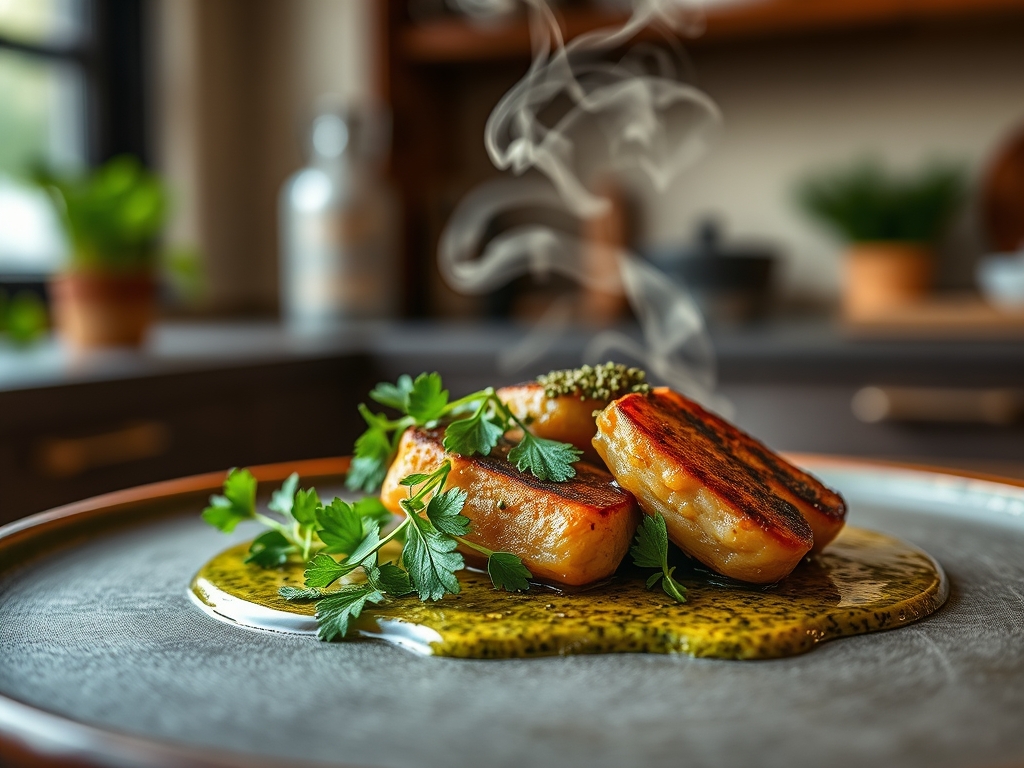
Referencing the Masterclass photo, you should observe a distinct separation of colors that remain harmonious. The herbs should appear as individual, bright green flecks suspended in a translucent, golden-green liquid. If the liquid appears cloudy, you have likely introduced too much water or over-whisked the mixture, creating a partial emulsion that traps air. If the red chili flakes have bled a dull orange hue into the entire sauce, your flakes were likely old or stored in a humid environment. To fix a "dull" looking sauce, add a teaspoon of fresh lemon zest at the very end; the citrus oils provide a reflective quality that catches the light and emphasizes the neon greens of the fresh parsley.
THE DEEP DIVE
Macro Nutrition Profile
A standard 30ml serving contains approximately 140 calories, primarily derived from monounsaturated fats. It is naturally low in carbohydrates (less than 2g) and contains zero protein. The high concentration of parsley provides a significant dose of Vitamin K and Vitamin C, making this a nutrient-dense flavor enhancer.
Dietary Swaps
- Vegan/Keto/GF: This recipe is inherently compliant with all three. To increase the "Umami" for a vegan profile, add 1/2 tsp of nutritional yeast.
- Low-FODMAP: Replace the fresh garlic with garlic-infused olive oil and omit the solid garlic cloves entirely.
Meal Prep & Reheating Science
Do not reheat this sauce. Heat is the death of a Chimichurri Suspension. If you are serving it over a hot steak, the residual heat of the meat is sufficient to render the fats and release the aromatics. For meal prep, store the herb and oil mixture separately from the vinegar, combining them only 30 minutes before service to ensure the molecular structure of the chlorophyll remains intact.
THE KITCHEN TABLE
Why is my chimichurri bitter?
Bitterness usually stems from over-processing the herbs in a blender or using low-quality olive oil. The high-speed blades can shear the oil molecules, releasing bitter polyphenols. Stick to hand-chopping for a cleaner, more sophisticated flavor profile.
Can I use dried herbs instead?
Absolutely not. A suspension relies on the cellular moisture and structural bulk of fresh vegetation. Dried herbs will simply create a gritty, unappealing oil that lacks the bright, piquant punch required for a true Chimichurri.
How long does the suspension last?
While it is safe to eat for up to five days when refrigerated, the aesthetic peak is within the first four hours. After 24 hours, the acid will inevitably begin to dull the greens, though the flavor remains excellent.
What is the best way to store leftovers?
Place the suspension in a glass jar and press a piece of plastic wrap directly onto the surface of the fluid. This minimizes oxygen exposure, which is the primary catalyst for both browning and flavor degradation.