The air in a high-performance kitchen does not just smell like herbs; it vibrates with the volatile aromatic compounds of bruised Genovese basil and the heavy, fatty scent of toasted Pinus sibirica. We are not merely making a condiment here. We are engineering a stable lipid suspension. If your current green sauce resembles a watery puddle of grass clippings floating in a pool of oil, your infrastructure has failed. True Pesto Emulsification is the holy grail of cold-process saucing. It requires a precise understanding of how solid particulates interact with liquid fats to create a viscous, velvet-textured masterpiece that clings to pasta with magnetic intensity. We are looking for a piquant bite, a deep emerald hue, and a mouthfeel that suggests luxury rather than a salad dressing. This is a technical audit of your flavor profile. We are moving beyond the blender to embrace the shear forces required to marry oil and water into a permanent, glorious union. Strap in; we are about to recalibrate your culinary hardware.
THE DATA MATRIX
| Metric | Specification |
|---|---|
| Prep Time | 15 Minutes |
| Execution Time | 10 Minutes |
| Yield | 350ml / 1.5 Cups |
| Complexity (1-10) | 7 (Precision Dependent) |
| Estimated Cost per Serving | $2.45 USD |
THE GATHERS
Ingredient Protocol:
- Fresh Genovese Basil: 80g / 4 cups (packed)
- Toasted Pine Nuts: 60g / 0.5 cups
- Parmigiano-Reggiano (Aged 24 Months): 50g / 0.75 cups (finely grated)
- Pecorino Romano: 20g / 0.25 cups (finely grated)
- Garlic Cloves (Germ removed): 2 medium units
- Extra Virgin Olive Oil (Cold Pressed): 150ml / 0.6 cups
- Maldon Sea Salt: 5g / 1 teaspoon
- Ice-Cold Water: 15ml / 1 tablespoon (The secret stabilizer)
Section A: Ingredient Quality Audit:
The most common failure point in Pesto Emulsification is the use of oxidized or "sweaty" basil. If your leaves are dark or limp, the cellular structure has already collapsed; this releases enzymes that will turn your sauce brown within minutes. To fix this, perform a brief shock-blanch: dip the basil in boiling water for exactly three seconds and immediately plunge into an ice bath. Dry thoroughly using a centrifuge or salad spinner. Furthermore, avoid pre-grated cheese at all costs. The anti-caking agents (cellulose) used in commercial shreds act as an abrasive that prevents a smooth emulsion. Always use a microplane to create a snowy, high-surface-area powder that integrates into the oil phase instantly.
THE MASTERCLASS
1. The Aromatic Base Construction
Start by placing your garlic and sea salt into a heavy granite mortar or a high-torque food processor. Pulse or grind until a smooth, translucent paste forms. The salt acts as an abrasive to shear the garlic cell walls, releasing the essential oils.
Pro Tip: Use a digital scale to ensure your garlic-to-salt ratio is exact; too much garlic will overwhelm the delicate pine nut lipids, while too little salt prevents the mechanical breakdown of the fibers.
2. Lipid Integration and Toasting
Add your toasted pine nuts to the garlic paste. Process until the nuts are broken down into a coarse, oily meal. You are looking for the point where the nuts begin to render their internal fats, creating a thick, nutty paste that will serve as the primary emulsifier.
Pro Tip: Toast your pine nuts in a stainless steel saucier over low heat until they are golden but not dark brown; over-toasting creates bitter carbon notes that destroy the piquant nature of the basil.
3. The Leaf Incorporation Phase
Add the basil leaves in three distinct stages. If using a processor, pulse briefly. If using a mortar, use a circular grinding motion to aerate the leaves without generating heat. Heat is the enemy of chlorophyll; if the mixture exceeds 80 degrees Fahrenheit, the color will dull.
Pro Tip: Use a bench scraper to keep the mixture centered in your workspace, ensuring every leaf is evenly macerated rather than just sliced.
4. The Emulsion Bridge
Slowly drizzle in the extra virgin olive oil while whisking or pulsing continuously. This is where Pesto Emulsification occurs. The proteins in the cheese and the fats in the nuts work together to encapsulate the oil droplets. Add the tablespoon of ice-cold water at the very end to lock the suspension in place.
Pro Tip: The cold water acts as a thermal buffer and a secondary liquid phase that prevents the oil from separating, resulting in a significantly more viscous final product.
Section B: Prep & Timing Fault-Lines:
The primary human error in this protocol is speed. High-speed blender blades generate friction, which cooks the basil and oxidizes the oil, creating a metallic aftertaste. If your equipment feels warm to the touch, stop immediately and place the work bowl in the freezer for five minutes. Timing is also critical when adding the cheese. If you add the cheese too early, the lactic fats can clump before the olive oil is fully integrated. Always fold the cheese in at the final stage to maintain the structural integrity of the sauce.
THE VISUAL SPECTRUM
Section C: Thermal & Visual Troubleshooting:
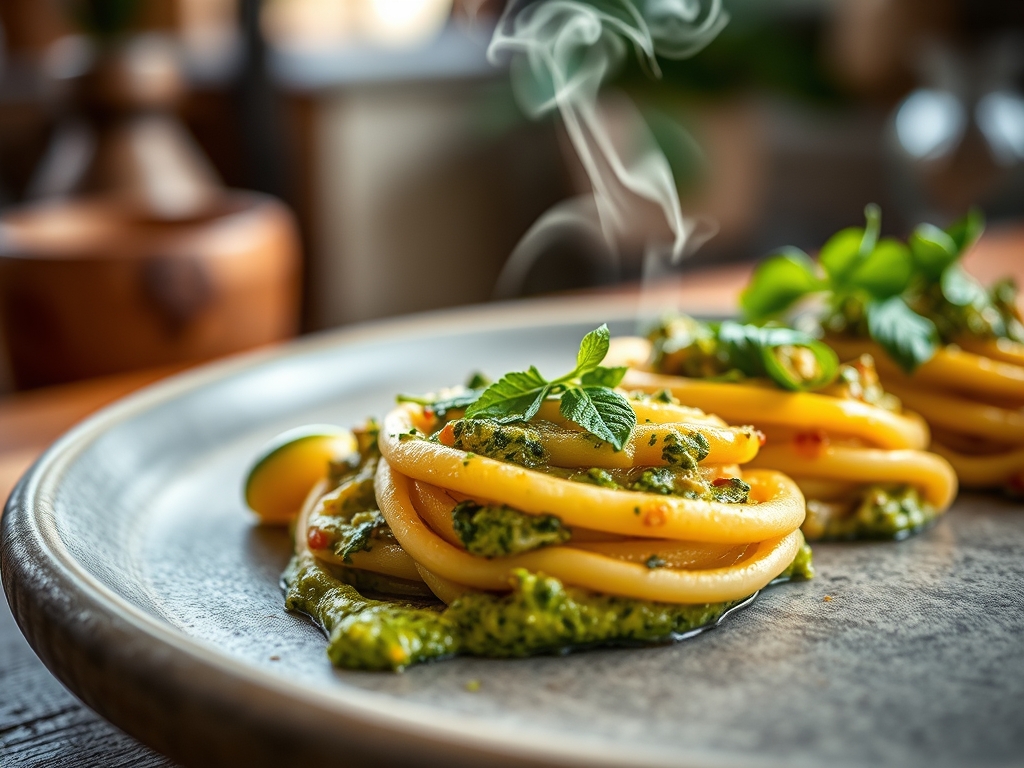
Referencing the Masterclass photo above, note the vibrant, neon-green saturation and the "tight" cling of the sauce to the spoon. If your pesto looks "broken" (oil pooling at the edges), you have failed to create a sufficient mechanical bond. To fix a broken pesto, whisk in a teaspoon of warm pasta water; the starches will act as a temporary bridge. If the color is olive-drab rather than emerald, you have likely over-processed the greens or used oil that was too acidic. Ensure your olive oil is fresh; rancid oil has a yellow-brown tint that will muddy the visual spectrum of the dish. A perfect pesto should look like liquid jade with visible, suspended flecks of white cheese and toasted nut.
THE DEEP DIVE
Macro Nutrition Profile
A standard 60ml serving provides approximately 280 calories, dominated by heart-healthy monounsaturated fats from the olive oil and pine nuts. It contains roughly 4g of protein and 2g of fiber. While calorie-dense, the nutrient density is exceptionally high due to the concentration of Vitamin K and antioxidants in the fresh basil.
Dietary Swaps (Vegan/Keto/GF)
- Vegan: Replace the Parmigiano and Pecorino with a 50/50 mix of nutritional yeast and toasted hemp hearts to maintain the savory "umami" profile.
- Keto: This recipe is naturally keto-compliant; however, ensure your pine nuts are fresh to avoid "pine nut syndrome" which can affect taste buds in ketosis.
- GF: Naturally gluten-free, but ensure your nuts are processed in a facility free of cross-contamination.
Meal Prep & Reheating Science
To maintain the molecular structure when reheating, never microwave pesto. The intense radiation will cause the oil to separate and the basil to turn gray. Instead, toss the cold pesto with hot pasta off the heat. The residual heat of the noodles (around 160 degrees Fahrenheit) is sufficient to infuse the pasta without breaking the emulsion. For storage, cover the surface with a thin layer of oil to prevent oxygen contact.
THE KITCHEN TABLE
Why did my pesto turn bitter?
Bitterness usually stems from over-processing extra virgin olive oil in a high-speed blender. The blades break the oil's polyphenols, releasing a harsh flavor. Always pulse gently or stir the oil in by hand at the end.
Can I substitute walnuts for pine nuts?
Yes, but walnuts contain more tannins. To fix this, blanch the walnuts in boiling water for one minute and peel the skins. This ensures the lipid density remains high without adding an astringent aftertaste to your emulsion.
How long does a stable emulsion last?
A well-executed Pesto Emulsification will stay stable in the refrigerator for 5 to 7 days. If the oil separates, simply whisk it vigorously with a fork before serving to reintegrate the fats.
Does the type of salt really matter?
Absolutely. Fine table salt can be too "salty" and lacks the abrasive edges needed to grind the garlic and basil. Maldon or Kosher salt provides the mechanical friction necessary for a superior, hand-ground texture.