Forget everything you think you know about condiments. We are not discussing a mere dip or a casual smear of blended vegetables. We are initiating a high-stakes Romesco Sauce Audit to analyze the structural integrity of the greatest culinary export from Catalonia. This is a study in textured fluids, where the humble almond and hazelnut act as the load-bearing pillars for a vibrant, viscous architecture of roasted peppers and garlic. When executed with precision, a proper Romesco is a masterpiece of emulsification and Maillard reaction complexity. It should hit the palate with a piquant punch of vinegar before mellowing into the deep, smoky resonance of charred Nora peppers. If your current version is watery, pale, or lacks that gritty, rustic soul, your infrastructure has failed. We are here to rebuild the foundation. We are here to ensure that every molecule of oil is perfectly suspended in a matrix of toasted nut proteins and hydrated bread crumbs. Let us begin the audit.
THE DATA MATRIX
| Metric | Specification |
|---|---|
| Prep Time | 20 Minutes |
| Execution Time | 45 Minutes |
| Yield | 750ml / 3 Cups |
| Complexity (1-10) | 4 |
| Estimated Cost per Serving | $0.85 USD |
THE GATHERS
Ingredient Protocol:
- 120g / 1 cup Marcona almonds, raw and skinless.
- 60g / 1/2 cup Hazelnuts, blanched.
- 3 Large Red bell peppers (approx. 600g).
- 4-5 Nora chilies, dried (or 2 tbsp bittersweet smoked paprika).
- 1 Head of Garlic, whole.
- 2 Large Roma tomatoes, ripe.
- 1 slice Sourdough bread, 2cm thick.
- 250ml / 1 cup Extra virgin olive oil, high polyphenol count.
- 60ml / 1/4 cup Sherry vinegar (Vinagre de Jerez).
- 10g / 2 tsp Sea salt, fine grain.
Section A: Ingredient Quality Audit:
The primary failure point in most Romesco builds is the quality of the lipids and the age of the nuts. If your almonds smell like a dusty attic, your sauce is DOA. Rancid fats cannot be hidden by spice. To fix sub-par nuts, perform a quick thermal refresh by tossing them in a dry saucier for 90 seconds to coax out any remaining volatile oils. If using canned peppers instead of fresh, you must drain them for at least 30 minutes on a wire rack; excess canning liquid introduces unwanted acidity and ruins the viscosity. Finally, ensure your Sherry vinegar is authentic. Cheap balsamic or apple cider vinegar lacks the specific acetic profile required to cut through the heavy nut proteins.
THE MASTERCLASS
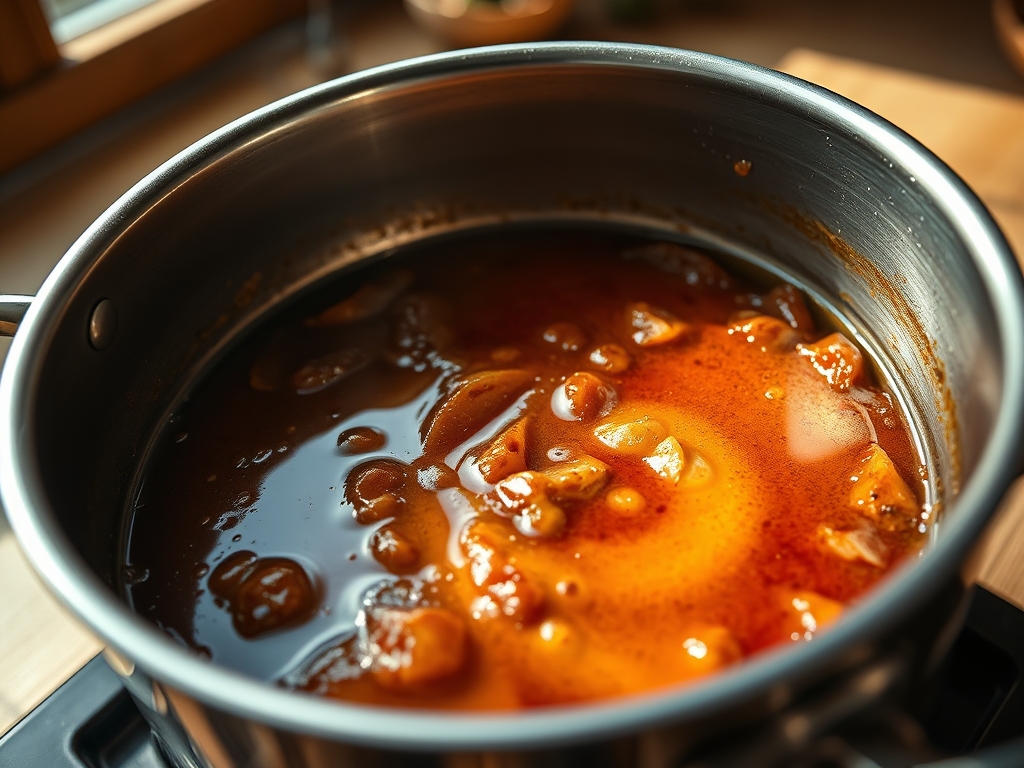
Step 1: The Thermal Component Char
Place the peppers, tomatoes, and the whole head of garlic (top lopped off) on a sheet tray. Roast at 220C / 425F until the skins are blackened and blistered.
Pro Tip: Use a bench scraper to easily move charred vegetables from the tray to a bowl. Covering the bowl with plastic wrap for ten minutes uses residual steam to loosen the skins, ensuring a smoother emulsification later.
Step 2: The Protein and Carbohydrate Foundation
In a small skillet, heat 30ml of oil and fry the sourdough slice until golden brown. Remove the bread, then toast the almonds and hazelnuts in the same oil until they reach a deep mahogany hue.
Pro Tip: Use a digital scale to measure your nuts precisely. The ratio of bread to nuts determines the final viscous quality of the sauce; too much bread makes it pasty, while too many nuts make it oily.
Step 3: The Mechanical Reduction
Peel the charred vegetables and discard the seeds. Place the nuts, bread, peppers, tomatoes, and squeezed roasted garlic into a heavy-duty blender or food processor. Pulse until a coarse paste forms.
Pro Tip: Do not over-process. A Romesco should have "grit." You want to aerate the mixture slightly but maintain the structural integrity of the nut fragments to provide tactile interest on the tongue.
Step 4: Lipid Integration and Acid Balance
With the motor running on low, slowly stream in the remaining olive oil and the Sherry vinegar. Season with salt and smoked paprika.
Pro Tip: This is a "broken" emulsion by design. Unlike a mayonnaise, you want the oil to barely cling to the solids. Using a saucier to slightly warm the oil before integration can help it infuse more deeply with the smoky pepper solids.
Section B: Prep & Timing Fault-Lines:
The most common timing error occurs during the roasting phase. If the garlic is pulled too early, it remains pungent and sharp rather than sweet and mellow. If the peppers are not charred enough, you lose the essential smoky "DNA" of the sauce. Use a digital probe thermometer if you are unsure; the interior of the roasting tomatoes should reach at least 90C to ensure the sugars have fully carmelized. If the sauce feels too thick, do not add water. Water breaks the molecular bond of the fats. Instead, use more oil or a splash of vinegar to adjust the flow.
THE VISUAL SPECTRUM
Section C: Thermal & Visual Troubleshooting:
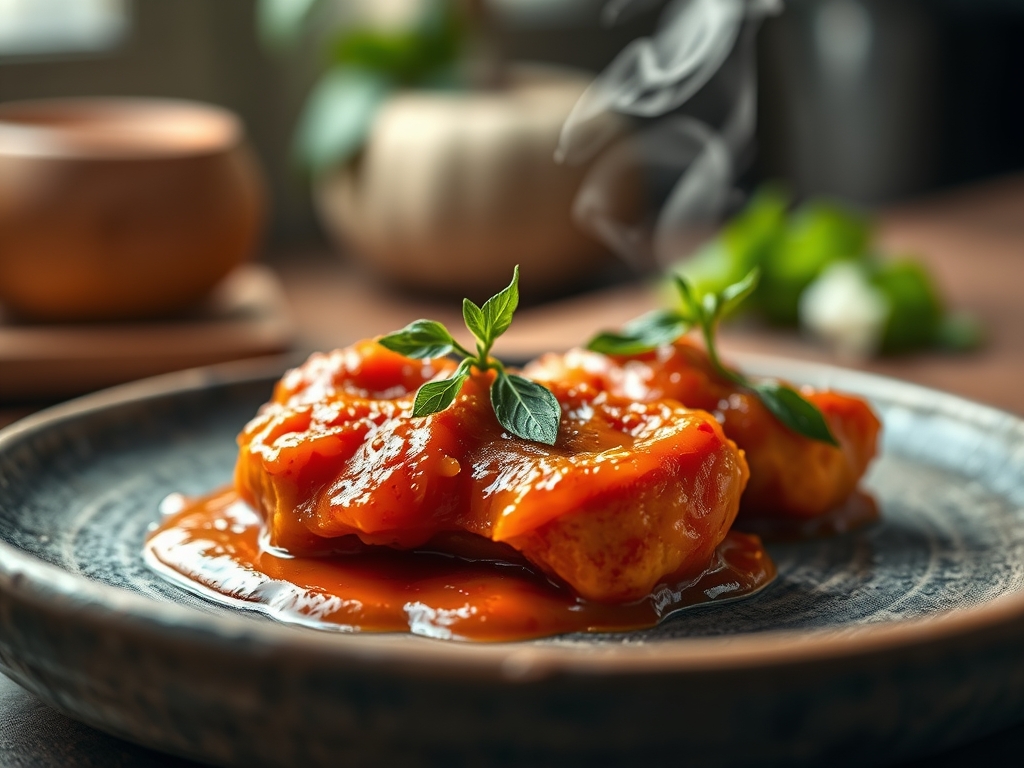
Look closely at the reference image. Notice the vibrant ochre and deep crimson hues. If your sauce looks pale or orange, you likely under-roasted the peppers or over-processed the mixture, introducing too much air. Dull colors often indicate oxidized oil or old paprika. To fix a "flat" appearance, stir in a teaspoon of tomato paste that has been rendered in a hot pan for 60 seconds. If you see oil pooling at the edges of your bowl, your emulsion has collapsed. To rescue it, whisk in a small amount of freshly toasted, finely ground breadcrumbs to act as a stabilizer and soak up the stray lipids.
THE DEEP DIVE
Macro Nutrition Profile:
A standard 60ml serving contains approximately 210 calories, 18g of healthy monounsaturated fats, 4g of fiber, and 3g of protein. It is a nutrient-dense powerhouse packed with Vitamin E and Vitamin C from the peppers.
Dietary Swaps:
- Vegan: Naturally vegan.
- Keto: Eliminate the sourdough bread; increase the almond count by 30g to maintain the viscous body.
- Gluten-Free: Use GF bread or substitute with a roasted Yukon Gold potato for the same starchy binding effect.
Meal Prep & Reheating Science:
Romesco is a rare beast that improves with age. As it sits in the refrigerator, the oils infuse with the capsaicin and garlic. It will hold its molecular structure for up to 7 days. When reheating, do not use a microwave; the uneven waves will cause the oil to separate. Instead, bring it to room temperature naturally or warm it gently in a saucier over a low flame, whisking constantly to maintain the emulsion.
THE KITCHEN TABLE
How do I fix a sauce that is too acidic?
Balance the pH by adding more toasted nuts or a tiny pinch of sugar. The fats in the nuts act as a buffer against the sharp acetic acid of the Sherry vinegar.
Can I use a mortar and pestle?
Yes. This is the traditional method. It creates a superior, variegated texture that a machine cannot replicate. Grind the nuts first, then work in the wet aromatics and oils.
Why is my Romesco bitter?
You likely burnt the garlic or the almonds. Even a few seconds of over-toasting can release bitter alkaloids. If it is bitter, try adding a splash more oil to coat the tongue.
What is the best way to serve this?
While traditionally served with charred scallions (calçots), it is an infrastructure powerhouse for grilled octopus, roasted chicken, or even as a base for a sophisticated grain bowl.