Forget everything you know about the humble side dish. We are not here to discuss lumpy, uninspired mash or the watery starch-slurry served in school cafeterias. We are here to engineer a masterpiece of culinary infrastructure. Welcome to the high-stakes world of the Whipped Potato Purée; a dish that is less of a recipe and more of a structural achievement in lipid-starch emulsification. Imagine a cloud that has been infused with the richness of a dairy farm and the salt-kissed essence of a professional kitchen. It must be silky. It must be aerated. It must possess a viscosity that defies the laws of gravity while maintaining a luxurious mouthfeel that lingers long after the first bite. To achieve this, we must treat the potato not as a vegetable, but as a vessel for texture. We are building a foundation of flavor that requires precision, speed, and an uncompromising dedication to the science of the tuber. Prepare your palate for the ultimate audit of starch.
THE DATA MATRIX
| Metric | Specification |
|---|---|
| Prep Time | 20 Minutes |
| Execution Time | 35 Minutes |
| Yield | 4 Standard Servings |
| Complexity (1-10) | 4 (Technique Intensive) |
| Estimated Cost per Serving | $1.25 USD |
THE GATHERS
Ingredient Protocol:
- 1 kg / 2.2 lbs Yukon Gold Potatoes (Peeled and quartered)
- 250 ml / 1 cup Heavy Cream (Minimum 36% milkfat)
- 225 g / 1 cup Unsalted European-style Butter (Chilled and cubed)
- 15 g / 1 tbsp Kosher Salt (For the boiling liquor)
- 2 g / 0.5 tsp White Pepper (Finely ground)
- 5 g / 1 tsp Sea Salt (For final seasoning)
- 20 ml / 1.3 tbsp Chives (Finely minced for garnish)
Section A: Ingredient Quality Audit:
Sub-par raw materials are the primary cause of structural failure in a Whipped Potato Purée. If your potatoes feel soft or display a green tint, the solanine levels are too high; discard them immediately. If you are forced to use Russets instead of Yukon Golds, be aware that their high starch content leads to a fluffier but less viscous result. To fix a "mealy" texture caused by low-quality tubers, increase your fat ratio by 10% to provide the necessary lubrication for the starch granules. If your cream lacks the required fat percentage, the emulsion will break. In this scenario, whisk in a cold emulsion of butter and a splash of whole milk to stabilize the mixture before folding it into the potato base.
THE MASTERCLASS
1. Thermal Hydration and Extraction
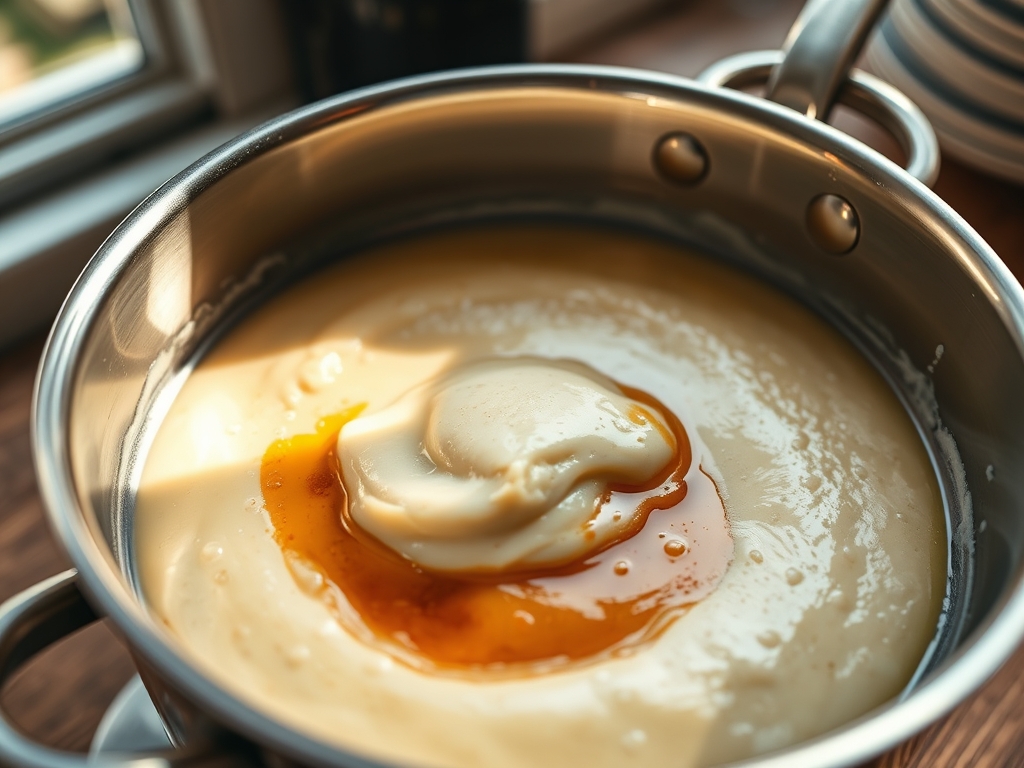
Place your quartered potatoes into a heavy-bottomed saucier and cover with cold, filtered water. Add the kosher salt. Bring the vessel to a gentle simmer rather than a rolling boil. Use a digital scale to ensure your salt-to-water ratio is exactly 1.5%.
Pro Tip: Starting with cold water ensures the exterior of the potato does not overcook and slough off before the interior reaches the target temperature. This prevents the "water-logged" effect that ruins the structural integrity of the starch.
2. The Dehydration Phase
Once the potatoes are fork-tender, drain them thoroughly. Return the potatoes to the warm pot over low heat for 60 seconds. Use a bench scraper to move them around, allowing residual steam to escape.
Pro Tip: This is the most overlooked step in the infrastructure of a purée. By removing excess moisture through evaporation, you create "room" within the starch cells to absorb the heavy cream and butter later.
3. Mechanical Breakdown
Pass the hot potatoes through a fine-mesh food mill or a ricer into a clean bowl. Do not use a food processor; the high-speed blades will shear the starch molecules, turning your elegant purée into a gummy, elastic glue.
Pro Tip: Speed is of the essence here. You must process the potatoes while they are hot to ensure the cell walls remain pliable. A cold potato is a stubborn potato that refuses to aerate.
4. Lipid Integration
In a small saucepan, infuse your heavy cream with white pepper and bring it to a simmer. Slowly stream the warm cream into the potatoes while whisking vigorously. Once the cream is absorbed, begin adding the chilled butter cubes one by one.
Pro Tip: Cold butter added to hot potatoes creates a more stable emulsion than melted butter. The milk solids in the butter act as an emulsifier, wrapping around the starch to create a velvet-like finish.
5. Final Aeration and Seasoning
Switch to a balloon whisk and beat the mixture for 30 seconds to incorporate air. Taste for seasoning and add the sea salt. The final product should hold a soft peak and possess a glossy, reflective sheen.
Pro Tip: Use a silicone spatula to scrape down the sides of the bowl to ensure every gram of material is uniform. A consistent texture is the hallmark of professional infrastructure.
Section B: Prep & Timing Fault-Lines:
Timing is the silent killer of the Whipped Potato Purée. If the potatoes sit too long after cooking, the starch begins to retrogress, resulting in a gritty texture. If your cream is added cold, it will shock the starch and cause the emulsion to "weep" liquid. To rectify a cooling purée, place the bowl over a pot of simmering water (a bain-marie) and gently whisk in a tablespoon of warm milk to restore the viscous flow.
THE VISUAL SPECTRUM
Section C: Thermal & Visual Troubleshooting:
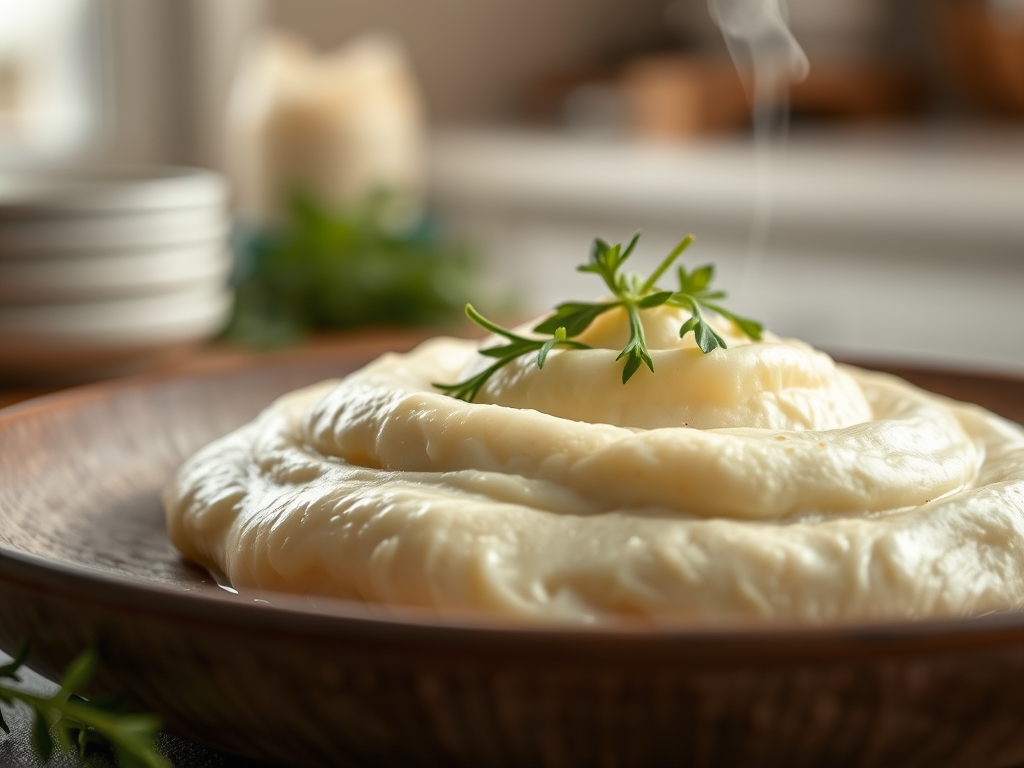
The Masterclass photo reveals a purée with a luminous, ivory hue and a surface that catches the light; this indicates a successful fat-to-starch ratio. If your purée appears dull or matte, you have insufficient lipid content; whisk in more butter. If the color is overly yellow, your potatoes may have been over-boiled, leaching out their natural pigments. Uneven browning or "skin" formation on the surface occurs when the dish is left uncovered; always press a piece of parchment paper directly onto the surface of the purée if it is not being served immediately. If you see small lumps, your ricer was not fine enough; a secondary pass through a tamis (fine drum sieve) will solve this visual inconsistency.
THE DEEP DIVE
Macro Nutrition Profile:
A standard serving of this engineered purée contains approximately 320 calories. The breakdown is roughly 22g of carbohydrates, 24g of fats (primarily from the butter and cream), and 3g of protein. While it is a high-energy food, the satiety index is exceptionally high due to the lipid density.
Dietary Swaps:
- Vegan: Replace the butter with a high-quality cashew-based butter and swap the heavy cream for full-fat coconut milk or a neutral-flavored oat cream.
- Keto: This is a starch-heavy dish; however, you can substitute 50% of the potato volume with steamed, riced cauliflower to reduce the glycemic load.
- GF: Naturally gluten-free, but ensure your white pepper and salt sources are not cross-contaminated.
Meal Prep & Reheating Science:
Reheating a purée is a delicate operation. Do not use a microwave; the uneven heating will cause the butter to render out and separate. Instead, place the purée in a saucepan over low heat and add a splash of cream. Whisk constantly to re-emulsify the fats as they warm up. This maintains the molecular structure and prevents the dish from becoming oily.
THE KITCHEN TABLE
Why is my purée gummy like glue?
You likely over-worked the starch. Using a blender or food processor ruptures the starch granules, releasing amylose which creates a sticky, glue-like consistency. Stick to a ricer or food mill for a clean, fluffy break.
Can I use red potatoes for this?
Red potatoes are waxy and hold their shape well, making them poor candidates for a whipped purée. They lack the starch density required to create a smooth, aerated texture. Stick to Yukon Gold or Russet for the best results.
How do I get that restaurant-style shine?
The secret is the "cold butter" technique and the final whisking phase. The shine comes from a perfectly stable emulsion where the fat is suspended evenly throughout the starch. More butter equals more shine and a better mouthfeel.
Should I peel the potatoes before or after boiling?
Peel before boiling for a cleaner flavor and more efficient starch extraction. Boiling with skins on can lead to "earthy" off-flavors and makes the ricing process significantly more difficult and messy. Efficiency is key to quality.